
Imagine returning home on a Friday afternoon to find your carefully curated sanctuary marred by a deep scratch across the floorboards or a cracked tile in your newly renovated patio. You’ve spent years elevating your living space into a destination for well-being, so discovering that a professional visit has resulted in accidental damage feels like a breach of trust. It’s a common frustration, and knowing exactly what to do if a tradie damages your property is the first step in reclaiming your peace of mind. You’ve invested significantly in the longevity of your home, and seeing that craftsmanship compromised is understandably distressing.
We agree that your home is more than just a building; it’s a reflection of your lifestyle that deserves absolute protection. This guide will empower you to navigate property damage with professional poise, ensuring you don’t feel lost between complex insurance claims and out-of-pocket expenses. We will walk you through the essential steps of documentation, negotiation strategies, and your legal protections under the Australian Consumer Law to ensure your space returns to its seamless, beautiful state.
Key Takeaways
- Learn why maintaining a composed, professional dialogue is the most effective way to protect your home sanctuary when unexpected damage occurs during a renovation.
- Master the art of building a bulletproof evidence trail with high-resolution documentation so you know exactly what to do if a tradie damages your property to ensure a seamless resolution.
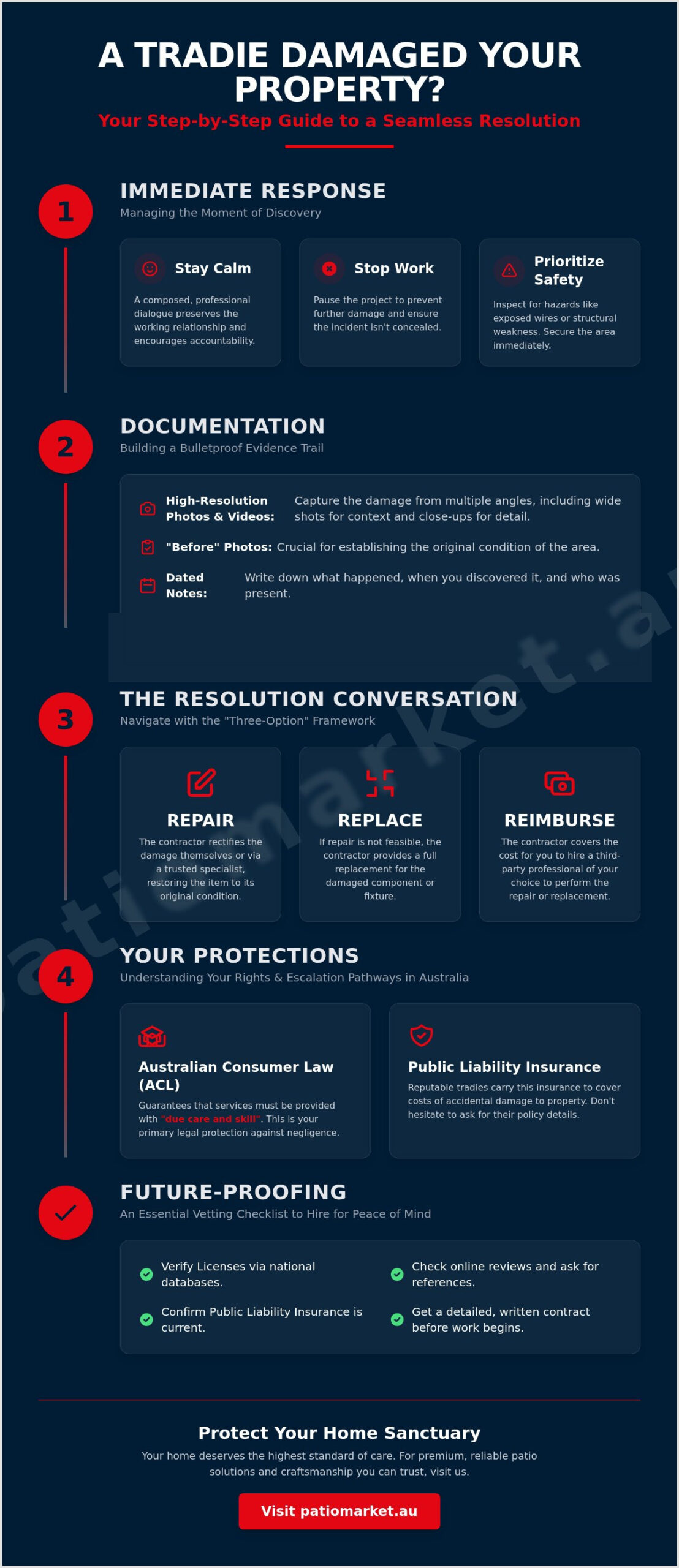
- Discover the “Three-Option” framework-repair, replace, or reimburse-designed to navigate resolution conversations with the poise of a seasoned lifestyle curator.
- Understand your protections under the Australian Consumer Law (ACL) regarding “due care and skill” and how to effectively leverage a contractor’s public liability insurance.
- Implement an essential vetting checklist to verify licences and insurance via national databases, ensuring your home remains a place of enduring craftsmanship and peace of mind.
Immediate Response: Managing the Moment of Discovery
Discovering a deep gouge in your premium sandstone or a fracture in a custom glass balustrade can instantly disrupt the sense of sanctuary you’ve worked hard to create. Your home is an investment in well-being, so seeing it compromised is naturally distressing. However, the first few minutes after an accident occur are the most critical. Knowing what to do if a tradie damages your property begins with a composed, professional approach that keeps the project on track while protecting your rights.
Remaining calm isn’t just about politeness; it’s a strategic move to preserve the working relationship. A constructive dialogue allows the contractor to take accountability without feeling defensive. If the damage is more than a minor scuff, you should implement a ‘Stop Work’ protocol. Pausing the project ensures that no further work hides the damage or complicates the repair process. This pause is especially vital if the incident affects structural elements or integrated systems like irrigation or lighting. Taking a moment to breathe helps you transition from an emotional reaction to a solution-oriented mindset.
Safety must always remain your primary concern. Before worrying about the cost of repairs, inspect the area for immediate hazards. If a tradie has accidentally struck a power line or compromised a load-bearing timber beam, the site becomes a high-risk zone. In these instances, your focus shifts from aesthetics to protection. In Australia, approximately 15% of household construction accidents involve utility strikes, making it essential to act decisively if you suspect a gas leak or electrical fault. Identifying these risks early prevents a bad situation from becoming a genuine emergency.
The Golden Rule of Non-Interference
Resist every urge to pick up a tool and fix the problem yourself. Touching the damage can inadvertently void your insurance claim, as most providers require the scene to remain exactly as it was when the incident occurred. Preserving the area allows the contractor and their insurer to conduct a fair assessment of the liability. You’re protected by Australian consumer protection laws which mandate that services must be provided with due care and skill. Attempting a DIY repair before a formal inspection often shifts the legal burden of proof away from the contractor, potentially absolving them of financial responsibility for the original damage.
Securing the Area for Safety
Once you’ve paused the work, secure the perimeter to keep your family and pets away from potential danger. Check for compromised materials that might fail under the harsh Australian sun, such as damaged UV-stabilised screens or weakened structural timber. If the damage involves essential services, don’t wait for the original tradie to find a solution if they aren’t qualified to fix it. You should:
- Contact an emergency sparky if there are exposed wires or flickering circuits.
- Call a licensed plumber immediately if you notice dampness near foundations or a drop in water pressure.
- Cordon off the area with physical barriers to prevent accidental injury.
Taking these swift, measured steps ensures that what to do if a tradie damages your property is handled with the same level of craftsmanship and care you expect for your home’s design. By securing the site and documenting the state of the damage, you lay the groundwork for a seamless resolution that restores your outdoor sanctuary.
Documentation: Building a Bulletproof Evidence Trail
Your home is more than a structure; it’s a curated sanctuary where every tile and timber deck represents a significant investment in your well-being. When an accident disrupts this harmony, knowing what to do if a tradie damages your property starts with meticulous evidence. Think of documentation as the bridge that restores your space to its original elegance. High-resolution photos are your most powerful asset, proving the condition of your home before the first tool was even lifted.
Adopt a “before and after” mindset for every project, regardless of the scale. Before the tradie arrives, capture wide-angle shots of the work area and close-ups of adjacent surfaces. If a heavy piece of equipment chips your UV-stabilized travertine or scratches a custom-built outdoor kitchen, these initial images serve as your baseline. Review your initial quote and the “Scope of Works” immediately. These documents often contain specific liability clauses that define the contractor’s responsibility for surrounding surfaces and existing structures. If the damage occurs, you’ll need to demonstrate exactly how the work deviated from this agreed-upon plan.
Photographic and Video Best Practices
Capture the damage with the eye of a curator. Place a 50-cent coin or a standard ruler next to any scratches, dents, or cracks to provide an undeniable sense of scale. This precision removes any ambiguity during insurance claims or mediation. Record a slow, continuous video walkthrough of the affected area to show how the impact affects the flow and aesthetics of the space. Ensure your smartphone settings include digital timestamps; these metadata markers provide a chronological record that is difficult to dispute. This level of detail is essential when determining what to do if a tradie damages your property and refuses to acknowledge the extent of the impact.
The Paper Trail: Beyond the Photos
Send a formal “Notification of Damage” email to the contractor within 24 hours of the incident. Keep the language professional and objective, focusing on the facts of the craftsmanship gone wrong rather than the emotion of the moment. Reference your original agreement or any specific verbal promises made during the initial site visit. Maintaining a daily diary of all subsequent conversations, phone calls, and site inspections ensures you have a clear narrative of the resolution process. Protecting your investment often involves choosing premium outdoor furniture and materials that withstand the Australian climate, but even the most durable surfaces require a paper trail when professional errors occur. This structured approach transforms a stressful situation into a manageable project, allowing you to return to the relaxation you deserve.
The Resolution Conversation: Negotiating with Professionalism
Approaching a contractor about damage requires a delicate balance of firm expectations and professional grace. Your home is a sanctuary, and when that peace is disrupted by a cracked tile or a scuffed floorboard, it feels personal. Start the conversation by inviting the tradie or site manager to view the area together. Focus on the shared goal of a seamless finish. Understanding what to do if a tradie damages your property involves moving past the initial frustration to find a functional path forward.
Adopt the ‘Three-Option’ framework to guide your negotiation. This structure provides clarity for both parties and ensures the outcome aligns with the high standards of your living space:
- Repair: The tradie restores the item to its original condition using professional-grade materials.
- Replace: If the integrity of a premium material, like weather-resistant teak or custom masonry, is compromised, a full replacement is often the only way to maintain the aesthetic value.
- Reimburse: You agree on a specific A$ amount to be deducted from the final invoice, allowing you to hire a specialist of your choice to perform the rectification.
Setting a firm timeline is vital. Rectification work should not linger indefinitely; aim for a written commitment that the fix will be completed within 14 days. This keeps the project momentum alive while ensuring your home returns to its pristine state. Most importantly, retain your leverage. Never pay the final invoice until the damage is resolved to a professional standard. In the Australian building industry, holding the final 10 percent of a contract price is a common and respected practice to ensure quality control.
Mastering ‘Tradie Talk’ for Better Outcomes
Communicate your concerns using “I” statements to keep the dialogue collaborative. Instead of accusing, try saying, “I am concerned that this mark on the sandstone detracts from the craftsmanship we planned for.” This shifts the focus from blame to the integrity of the project. If a contractor denies responsibility, refer back to your date-stamped photos. Stick to the facts of the timeline. A professional curator of a home knows that documentation is the most persuasive tool in any dispute.
Formalising the Rectification Plan
A verbal promise carries little weight when dealing with significant property repairs. Create a simple ‘Agreement to Rectify’ document. This should list the specific damage, the agreed method of repair, and the deadline for completion. If the tradie’s proposed fix seems inadequate, suggest obtaining an independent third-party quote. In Australia, consumer guarantees under the ACL ensure that services must be provided with due care and skill. If the damage exceeds A$2,000, having a documented paper trail is essential for insurance purposes or potential tribunal escalations.
Escalation Pathways: Consumer Rights and Insurance in Australia
Your outdoor space is a curated sanctuary designed for relaxation and refined entertaining. When a contractor compromises the integrity of this investment, understanding what to do if a tradie damages your property requires a clear grasp of your statutory protections. The Australian Consumer Law (ACL), which came into effect on 1 January 2011, provides a robust framework to ensure your home remains the haven you intended it to be.
Your Rights Under Australian Consumer Law
Every service provided in Australia comes with automatic guarantees that the work will be carried out with due care and skill. If a contractor damages your weather-resistant finishes or structural masonry, they’ve likely breached these guarantees. You’re legally entitled to claim compensation for “reasonably foreseeable” loss. In a residential setting, this means the tradie is responsible for the costs required to return your property to its original state, including the replacement of premium materials like sustainable teak or UV-stabilized fabrics.
Under the ACL, a ‘Major Failure’ in service provision occurs when the work is so significantly defective that a reasonable consumer would not have engaged the professional had they known the extent of the risk, or if the service is fundamentally unfit for its purpose and cannot be rectified easily. When a major failure occurs, you have the right to terminate the contract and seek a refund or compensation for the diminished value of the property.
Navigating Insurance Claims
Protecting your lifestyle requires a professional approach to insurance. While your home and contents policy covers many domestic incidents, the tradie’s Public Liability Insurance is the primary vehicle for resolving damage caused during their work. It’s essential to distinguish between the two; your own policy might have high excesses or premium penalties that you shouldn’t have to bear for someone else’s mistake.
- Request Policy Details: If a contractor refuses to provide their insurer’s name or policy number, contact the relevant consumer protection agency or building authority. These bodies can often assist in disputes and ensure licensed contractors comply with regulations.
- Home Building Compensation: For larger renovation projects exceeding A$20,000, ensure you have a certificate for Home Warranty Insurance. This essential protection safeguards you against major defects if the builder becomes insolvent or disappears.
- The Subrogation Process: If the damage is extensive, your own insurer may pay for the repairs immediately and then “subrogate” the claim. This means they’ll legally pursue the tradie’s insurance company to recover the A$5,000 or A$50,000 they spent fixing your patio.
Resolving these disputes with confidence allows you to return your focus to what matters most: enjoying your home. Elevate your environment and ensure your next project is finished with the quality it deserves by choosing our premium outdoor furniture collections.
Future-Proofing: How to Hire for Peace of Mind
Protecting your home sanctuary begins long before the first tool is lifted. While you now understand what to do if a tradie damages your property, the ultimate goal is to cultivate a seamless renovation experience where risks are minimized through meticulous selection. Creating a sophisticated outdoor space should be a journey of excitement, not a lesson in dispute resolution. By establishing clear expectations and verifying professional credentials, you ensure your investment in craftsmanship remains protected.
Before any work commences, verify that your chosen professional holds active Public Liability Insurance with a minimum coverage of A$5 million, though many premium installers carry A$10 million to A$20 million for added security. You can verify these details and check for any history of disciplinary action through state-based licensing boards like the QBCC in Queensland, Fair Trading in NSW, or the Victorian Building Authority. A valid license is your first line of defense in maintaining the integrity of your home.
- Confirm the current status of their trade license via national databases.
- Request a Certificate of Currency for their insurance policy.
- Establish written site rules regarding the protection of existing features like pool glass or premium paving.
- Document the pre-existing condition of the work area with high-resolution photographs.
The Vetting Process: Beyond the Quote
True professionals welcome transparency. Ask specific questions about their damage management process during the initial consultation. A reputable tradie will explain how they protect your landscape and what steps they take if an accident occurs. Don’t rely solely on star ratings; read recent, verified customer reviews to see how the business handled challenges in the past. If a contractor is hesitant to discuss their insurance or previous disputes, it’s a clear signal to look elsewhere for your project.
Using Patio Market to Find Professionals
Finding an installer who respects the sanctuary of your home is simplified when you use a curated directory. At Patio Market, we focus on connecting homeowners with established professionals who value their reputation as much as you value your outdoor living space. These specialists understand the nuances of the Australian climate and the high standards required for luxury installations.
Hiring through a trusted source means you’re engaging with businesses that prioritize longevity and timeless design. These professionals often go beyond basic requirements, implementing protective measures like core-flute flooring covers or specialized scaffolding to ensure your existing features remain pristine. When you choose an installer who views your home as a canvas for their craftsmanship, the risk of needing to know what to do if a tradie damages your property becomes a distant concern.
Elevate your outdoor lifestyle with confidence. Find a verified patio professional on Patio Market today and begin your journey toward a perfectly executed home sanctuary.
Building Your Outdoor Haven with Confidence
Protecting the integrity of your sanctuary requires a blend of preparation and poise. Knowing exactly what to do if a tradie damages your property allows you to navigate mishaps with a clear head and a solid evidence trail. By leaning on the protections afforded by the Australian Consumer Law, which covers services up to A$100,000 for household use, you ensure that every repair meets the high standards your home deserves. True peace of mind comes from knowing your investment is shielded by both documentation and professional accountability. Your outdoor space should be a destination for relaxation, not a site of ongoing stress. When you choose to partner with vetted experts, you elevate the entire renovation experience from a risky gamble to a seamless transformation.
Ready to bring your vision to life without the worry? Start your next project with a verified professional on Patio Market. You’ll gain access to Australia’s most trusted patio installers through verified business listings and customer reviews, supported by expert resources for seamless outdoor living. It’s time to create the durable, beautiful retreat you’ve always imagined.
Frequently Asked Questions
Can I deduct the cost of the damage from the tradie’s final bill?
You generally cannot withhold payment or deduct repair costs without a formal agreement or a court order. While it’s tempting to offset the cost of a chipped tile against the final invoice, doing so might put you in breach of your contract. It’s better to pay the undisputed portion of the bill and issue a separate claim for the repairs. This maintains your standing as a professional homeowner while you navigate what to do if a tradie damages your property through the correct legal channels.
What happens if a tradie causes damage but doesn’t have insurance?
The tradesperson remains personally liable for the cost of repairs even if they lack a valid insurance policy. If a contractor damages your outdoor sanctuary and cannot pay, you can escalate the matter through state tribunals like NCAT in NSW or VCAT in Victoria. These bodies handle claims up to A$40,000 in most residential building disputes. Ensuring your peace of mind requires verifying their ABN and insurance certificates before any craftsmanship begins on your property to avoid these stressful situations.
Is a verbal agreement legally binding for property damage in Australia?
Verbal agreements are legally binding in Australia under common law, but they’re notoriously difficult to enforce without physical evidence. If a builder promises to replace a cracked deck board, that’s a contract. However, the Australian Competition and Consumer Commission (ACCC) recommends getting every detail in writing to avoid disputes. A quick email summary after a conversation creates a digital paper trail that protects your home’s aesthetic integrity and your financial interests when things go wrong.
How long do I have to report damage found after the tradie has left?
Report any damage immediately, though the Australian Consumer Law (ACL) generally allows for a reasonable period to discover faults. For visible issues like a scratched glass balustrade, most industry standards suggest notifying the business within 7 days of the job’s completion. Waiting longer than 30 days can complicate your claim, as the tradie might argue the damage occurred after they left your home. Swift action ensures the details remain fresh and your evidence is clear for any potential claim.
What if the tradie offers to fix the damage but I don’t trust them anymore?
You can legally refuse their offer to repair the damage if you can prove they lack the necessary skill or have acted in bad faith. While the ACL usually gives businesses a chance to fix minor issues, a major failure allows you to choose a different professional and recover the costs. If their previous work failed to meet the high standards of Australian craftsmanship, you have the right to protect your home from further substandard attempts at a solution by hiring a new expert.
Does Australian Consumer Law cover minor scratches or only major damage?
Australian Consumer Law protects you against both minor scratches and major structural failures through the guarantee of acceptable quality. Whether it’s a small scuff on a UV-stabilized surface or a significant leak in a new roof, the service must be performed with due care and skill. Understanding what to do if a tradie damages your property involves recognizing that even small aesthetic flaws disrupt the sanctuary you’ve built, and you’re entitled to a remedy that restores its original beauty.
Should I call my own home insurance company first?
Contact your home and contents insurer as soon as you identify significant damage to your property. While the tradie’s public liability insurance should ideally cover the loss, your own insurer can often provide immediate guidance and may even handle the claim recovery process on your behalf. Most Australian policies require notification of incidents within 24 to 48 hours to ensure your coverage isn’t compromised. This step provides an extra layer of protection for your high-end investments and outdoor lifestyle.
What if the damage was caused by a sub-contractor, not the main builder?
The head contractor is typically responsible for the actions and quality of work produced by any sub-contractors they hire. If a sub-contractor damages your seamless transition between indoor and outdoor living, your primary legal and contractual relationship is with the main builder. You should direct your claim to the person you signed the contract with originally. They’re obligated to ensure the entire project meets the promised standards of craftsmanship and care, regardless of who actually held the tools on the day.