Imagine standing on your future terrace, looking at a frame meant to be your sanctuary, only to find the gates locked and the site abandoned. With ASIC reporting that construction firms accounted for 2,781 insolvencies in the 2023-24 financial year, the risk to your home investment is tangible. You need to know exactly what happens if a builder goes into liquidation australia to prevent your dream from becoming a permanent construction zone. It’s heartbreaking to see your vision for a seamless indoor-outdoor lifestyle stalled by financial complexities you didn’t create.
We understand that your home is more than a project; it’s a destination for well-being that requires precision and care. This guide promises to clear the fog, offering a step-by-step recovery plan to reclaim your investment and secure your structural warranties. We’ll walk through insurance eligibility, the process of vetting a secondary contractor, and how to finally complete the elegant retreat you deserve. You’ll gain the clarity needed to turn an exposed construction site back into a high-end haven for your family.
Key Takeaways
- Secure your sanctuary by learning the immediate steps to take-including pausing payments and securing the site-when a project’s progress is suddenly interrupted.
- Navigate the complexities of what happens if a builder goes into liquidation australia by understanding how to leverage Home Building Compensation insurance to protect your investment.
- Gather a precise paper trail of contracts and certificates to ensure a seamless transition from insolvency to the eventual completion of your outdoor retreat.
- Future-proof your next project by mastering Australian deposit regulations and avoiding the pitfalls of volatile cost-plus contracts that can threaten your peace of mind.
- Discover how to successfully pitch a “rescue” job to premium builders, ensuring your vision for a sophisticated outdoor lifestyle is realized with quality craftsmanship.
Defining Builder Liquidation: What It Means for Your Project
Crafting a bespoke outdoor sanctuary requires a delicate balance of architectural vision and reliable craftsmanship. When that rhythm is disrupted by a builder’s financial collapse, the emotional and financial weight can feel overwhelming. Understanding what happens if a builder goes into liquidation australia starts with distinguishing between a temporary cash flow struggle and the finality of winding up a company. Insolvency occurs when a business can no longer meet its financial obligations as they fall due; liquidation is the legal process that follows to dismantle the entity entirely.
Once a builder enters liquidation, an independent liquidator takes control of the company’s affairs. Their primary objective is to identify and sell assets to repay creditors. For the homeowner, the immediate legal impact is absolute. All work on your site must cease instantly to protect the remaining assets and comply with insurance requirements. You lose the right to demand completion from the original contractor, and the site effectively becomes a legal standstill while the liquidator assesses the wreckage.
Monitoring the ASIC registers provides a window into a company’s health. A “deregistered” or “in liquidation” status is a definitive red flag that signals the end of the builder’s legal capacity to trade. In the 2022-23 financial year, ASIC reported that over 2,200 construction firms entered external administration, highlighting the volatility of the current market. Checking these statuses regularly ensures you aren’t the last to know when a project’s future is at risk.
The Legal Framework of Insolvency in Australia
The process is governed strictly by the Corporations Act 2001, which provides a national standard for how businesses are dissolved. Under Australian insolvency law, there is a rigid hierarchy for distributing remaining funds. Secured creditors, such as banks, and priority creditors, like employees, sit at the front of the queue. Homeowners are typically classified as unsecured creditors, often leaving them with cents on the dollar after assets are liquidated. Directors have a legal obligation to prevent the company from trading while it cannot pay its bills. Insolvent trading is a serious breach of director duties that can lead to personal liability for the builder’s leadership team.
Immediate Indicators of Financial Distress
Financial decay rarely happens in total silence. You might notice a sudden, unexplained absence of tradespeople on your site or find sub-contractors knocking on your door demanding direct payment for materials like UV-stabilized roofing or sustainable timber. A significant warning sign is a request for “front-loaded” progress payments. If a builder asks for A$20,000 for a stage that hasn’t commenced, they are likely using your funds to finish a previous client’s project. This shift from the excitement of design to the vigilance of a debt collector is a taxing but necessary transition for any homeowner sensing a change in the project’s momentum.
Home Warranty Insurance: Your Primary Line of Defence
Protecting your vision of a perfect home requires more than just high quality materials and elegant design. It demands a robust financial safety net. When you’re standing on your future deck and wondering what happens if a builder goes into liquidation australia, the answer lies within your Home Building Compensation (HBC) or Domestic Building Insurance (DBI). This mandatory insurance acts as a shield for homeowners, ensuring that the sanctuary you’re building doesn’t become a financial burden due to circumstances beyond your control.
Across Australia, builders must take out this insurance for residential projects exceeding specific cost thresholds, which vary by jurisdiction. The Certificate of Insurance is the most valuable document in your project file. It’s your proof that the insurer has vetted the builder’s eligibility and is prepared to step in if the project stalls. You should always secure this certificate before handing over a deposit or allowing work to commence.
Eligibility and Claim Triggers
This insurance operates as a policy of last resort. It doesn’t trigger simply because a builder is slow or difficult to work with. To lodge a successful claim, you must prove the builder is legally unable to fulfill their obligations. Valid triggers include insolvency, death, disappearance, or the suspension of their building license.
Timing is everything when your investment is at stake. Most policies require you to notify the insurer as soon as you become aware of the builder’s financial distress. For non-completion claims, for instance, policy terms typically specify a window from the date work ceased. Delaying your claim can complicate the process, so acting within weeks of a liquidation event is critical to maintaining your coverage. Once the structural integrity of your project is secured through these channels, you can return to the joy of planning your perfect outdoor retreat with confidence.
What the Policy Typically Covers
The primary purpose of the policy is to bring your original contract to life. It covers the costs associated with hiring a new, approved builder to complete the remaining scope of work. It also provides a vital layer of protection against structural defects or non-compliant work performed by the original contractor. Coverage limits are substantial but capped; specific amounts vary depending on the jurisdiction and policy.
- Completion Costs: Funding to finish the house according to the original plans.
- Defect Rectification: Repairing structural flaws that pose a risk to the building’s longevity.
- Legal and Professional Fees: Some policies assist with the costs of assessing the damage.
The 5-Step Recovery Plan Following Builder Insolvency
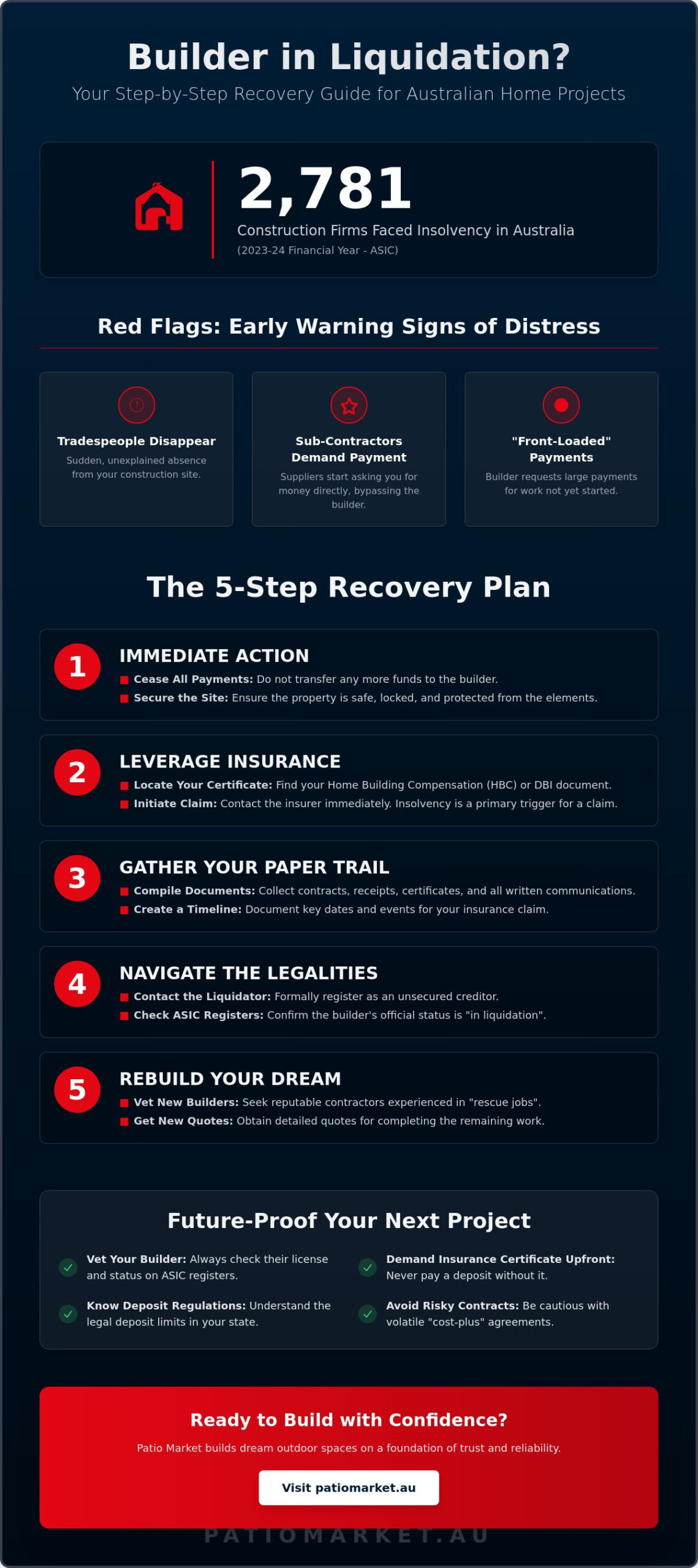
Discovering your builder has collapsed is a heavy blow to the dream of your perfect home. To protect your sanctuary, you must act with precision. First, cease all progress payments immediately. Every cent paid after a builder enters external administration is a loss you likely won’t recover. Secure the site to prevent theft, then begin your recovery by gathering a meticulous paper trail. You’ll need your signed contract, every receipt of payment, and your Home Building Compensation (HBC) or Domestic Building Insurance (DBI) certificate. Understanding what happens if a builder goes into liquidation australia starts with formalizing your status as a creditor. Contact the appointed liquidator and your state’s building authority, such as the QBCC in Queensland or the VBA in Victoria, to register your interest. Finally, lodge your insurance claim and hire an independent inspector to define the project’s current value.
- Cease Payments: Stop all bank transfers and direct debits to the builder or their subcontractors.
- Secure the Site: Change locks and install temporary fencing to protect your investment.
- Audit the Paperwork: Collect your A$20,000+ deposit receipts and the essential insurance certificate.
- Lodge Claims: Submit a formal claim with your state’s home warranty provider to trigger the payout process.
- Professional Inspection: Document every unfinished detail to ensure your insurance payout covers the actual cost of completion.
Securing the Sanctuary
Protecting your half-finished patio or extension from the harsh Australian elements is your top priority. Exposed timber frames can warp under the 40-degree summer sun, while unsealed masonry is vulnerable to heavy coastal rains. Use high-quality, UV-stabilized tarpaulins to shield these areas, but don’t touch the builder’s tools or remaining materials. Legally, these items often belong to the liquidator or suppliers under “Retention of Title” clauses. Removing them could complicate your legal standing. You must also notify your home and contents insurer that the site is now “unoccupied” or “stalled.” Most standard policies have a 60-day limit on vacancy, so securing an extension is vital to keep your coverage active.
The Building Inspection: Auditing the Craftsmanship
Before a new builder steps onto your property, you need a professional audit. This inspection isn’t just a progress report; it’s a legal safeguard. Professional inspectors look for “latent defects,” which are structural flaws hidden behind finished surfaces like plasterboard or decking. These defects often go unnoticed until years later when the warranty has expired. A comprehensive report provides the evidence needed to calculate your insurance payout accurately. In Australia, these reports typically cost between A$1,500 and A$3,500, but they’re essential for establishing a baseline. This document ensures that when you ask what happens if a builder goes into liquidation australia, you have the data to prove exactly what it will take to finish your home to the standard you deserve.
Future-Proofing: Reducing Risk in Your Next Outdoor Project
Creating an outdoor sanctuary is an investment in your well-being, yet the process requires a sharp eye for detail to ensure your vision doesn’t vanish. Understanding what happens if a builder goes into liquidation australia is a vital part of your preparation. You can shield your project by adhering to the 10% deposit rule. Under various state laws, such as the NSW Home Building Act 1989, contractors cannot legally demand more than 10% upfront for residential work exceeding A$20,000. Paying more than this creates unnecessary exposure if the company’s financial health falters before the first post is even in the ground.
Fixed-price contracts offer a layer of security that “cost-plus” arrangements simply can’t match. During periods where timber and steel prices fluctuate by 15% or more annually, cost-plus contracts shift the entire burden of material volatility onto your shoulders. A fixed-price agreement encourages the builder to manage their margins effectively, providing you with a clear financial ceiling. Keep a steady hand on the pulse of the project through weekly, transparent updates. If a builder’s communication shifts from proactive to elusive, it’s often the first indicator of internal distress.
Due Diligence Before Signing
Your journey toward a seamless outdoor transition begins with a rigorous background check. Use state-based registers like Service NSW or the Victorian Building Authority to scan for past disciplinary actions or license suspensions. It’s essential to verify an Australian patio contractor’s license and insurance before any money changes hands. Requesting references for three projects completed within the last 12 months provides a current snapshot of their craftsmanship and reliability. A builder who prides themselves on quality will welcome this scrutiny.
Smart Progress Payments
Structure your payment schedule around tangible progress rather than calendar dates. Payments should align with meaningful milestones like footings poured or the roof frame being secured. Never pay for materials that haven’t arrived on your site. If a builder asks for “material deposits” for items sitting in their own warehouse, your capital is at risk. Ensure every change to the original design is documented in a written variation. This clarity prevents budget blowouts and helps you understand what happens if a builder goes into liquidation australia regarding unfinished work and disputed costs. Protecting your home’s evolution is about balancing high-end aspirations with practical safeguards.
Rebuilding the Dream: Finding a Reliable Replacement
Walking past a half-finished frame every morning can feel like a shadow over your home’s potential. You aren’t just looking for a tradesperson; you’re seeking a partner to reclaim your sanctuary. Many builders hesitate to take over ‘rescue’ jobs because they fear inheriting structural liabilities or hidden defects from the previous firm. To pitch your project successfully, provide a clear site audit and a transparent history of the work performed. While learning what happens if a builder goes into liquidation australia is distressing, finding a path forward restores your peace of mind. You must establish a new, separate contract for the completion of works. This document should explicitly define where the old work ends and the new craftsmanship begins, ensuring your investment is legally protected and insured from day one.
Vetting the ‘Rescue’ Builder
Choosing the right professional requires a discerning eye for both skill and stability. Ask potential builders if they’ve managed projects involving Home Building Compensation (HBC) insurance before. You’ll want to know how they plan to integrate their work with the existing structure without compromising the overall design. It’s helpful to review these 10 Questions to Ask Before Hiring a Patio Builder to ensure they meet the high standards your home deserves. Demand a seamless transition of warranties; the new builder should be confident enough in their assessment to stand behind the finished product. In the 2022-23 financial year, ASIC reported 2,111 construction industry insolvencies in Australia, so verifying a builder’s current solvency through credit checks is a non-negotiable step in your due diligence.
The Path to Completion
The final stretch of your project should focus on the lifestyle you originally envisioned. Your outdoor space is a destination for well-being, designed to elevate your daily rhythm. By leveraging the Patio Market directory, you connect with verified Australian installers who understand the nuances of local climate and high-end design. These professionals specialize in transforming stalled sites into elegant, durable retreats. They’ll handle the complexities of council sign-offs and final inspections, allowing you to focus on the rewards. Soon, the stress of the past months will fade as you enjoy your first sunset on a patio built to last. It’s about more than just timber and steel; it’s about creating a timeless backdrop for your family’s most cherished moments.
Reclaiming Your Outdoor Sanctuary
Navigating the complexities of what happens if a builder goes into liquidation australia requires a blend of practical action and informed decision-making. By leveraging the protections of the Home Building Act 1989 and acting swiftly with your Home Warranty Insurance provider, you can secure your site and recover your vision. This process isn’t just about finishing a build; it’s about restoring the peace of mind that comes with a well-managed project. You’ve identified the risks, and now you have the tools to move toward a more resilient future.
Elevate your home experience by partnering with professionals who prioritize craftsmanship and transparency. You deserve a seamless transition from your indoor living to a perfectly curated outdoor destination. Connect with Australia’s most trusted, verified patio installers on Patio Market to explore a curated directory of licensed specialists. Our platform provides verified customer reviews and detailed project galleries, backed by expert resources tailored for the unique Australian climate. Your dream of a tranquil retreat is within reach, and the right partnership will ensure it lasts for generations.
Frequently Asked Questions
Can I finish the building work myself if the builder goes into liquidation?
You should avoid completing the building work yourself as it typically voids your Home Building Compensation cover and future structural warranties. To maintain the integrity of your sanctuary, you must engage a new licensed contractor to take over the site. According to NSW Fair Trading guidelines, DIY work on a project valued over A$5,000 can complicate insurance claims and may not meet the rigorous Australian Standards required for safety.
Will Home Warranty Insurance cover the full cost of completing my patio?
Home Warranty Insurance generally covers up to A$340,000 in New South Wales or A$300,000 in Victoria, though it may not cover every incidental cost. When you wonder what happens if a builder goes into liquidation australia, remember that most policies cap finishing costs at 20% over the original contract price. This ensures your investment in a premium outdoor lifestyle remains protected even when craftsmanship must be transitioned to a new artisan.
What happens to the deposit I paid if the builder goes bust before starting?
You can usually recover your deposit by lodging a claim through your state’s domestic building insurance scheme. Most Australian states limit deposits to 10% for projects under A$20,000 and 5% for larger builds. If your builder becomes insolvent before breaking ground, your insurance provider typically refunds these funds so you can restart your journey toward a seamless indoor-outdoor transition with a more stable partner.
How do I find out who the appointed liquidator is for my builder?
You can identify the appointed liquidator by searching the ASIC Published Notices website using your builder’s ACN or ABN. This database provides the contact details for the insolvency firm managing the company’s wind-down. Once you have this information, submit a formal proof of debt form to ensure your interests are recorded during the liquidation process, which 90% of affected homeowners must do to stay informed.
Does builder liquidation affect my 6-year structural warranty?
Your 6-year structural warranty remains intact because the state-mandated insurance scheme steps in to cover defects when a builder is no longer trading. While the original company cannot perform repairs, your policy provides a safety net for major issues like foundation failure or roof leaks. This protection ensures your home remains a durable sanctuary, preserving the value of your craftsmanship for the full statutory period required by Australian law.
Is it possible to sue the directors of a liquidated building company personally?
Suing directors personally is difficult because companies are separate legal entities, though “insolvent trading” claims can be pursued by the liquidator. Under the Corporations Act 2001, directors may be held liable if they incurred debts while knowing the company couldn’t pay them. Individual homeowners rarely succeed in private litigation against directors; therefore, focusing on your insurance claim is usually the most effective path to restoring your outdoor lifestyle.
What should I do if a sub-contractor comes to my house to reclaim materials?
You should politely refuse entry and contact the liquidator immediately if a sub-contractor attempts to remove materials from your property. Once materials are delivered to your site and progress payments are made, they generally become your legal property under most Australian standard contracts. Protecting these assets is vital for maintaining the flow of your project, as 100% of onsite materials are usually considered part of the building’s value.
How long does the average insurance claim take for an insolvent builder?
The average insurance claim for an insolvent builder typically takes between 3 and 6 months to reach a resolution. This timeline includes the initial assessment, obtaining quotes from new builders, and final approval from the insurer. Understanding what happens if a builder goes into liquidation australia helps you manage expectations while you wait to resume the creation of your evocative and weather-resistant outdoor living space.