What if the most expensive element of your dream outdoor sanctuary isn’t the premium weather-resistant decking or the custom masonry, but a single paragraph buried deep within your paperwork? For many homeowners, the excitement of elevating their alfresco lifestyle is often dampened by the fear that “unforeseen issues” will lead to a budget blowout that exceeds the initial quote by 15% or more. You’ve likely felt that familiar pang of anxiety when scanning a technical document, wondering if a few lines of legal jargon could compromise your financial security. Understanding variation clauses in a building contract is the most effective way to protect your investment and maintain the sanctuary you’ve worked so hard to create.
We believe your journey toward a better life at home should be as seamless as the transition from your living room to your patio. You deserve to feel confident that every A$1,000 added to your project is justified, documented, and fair. This guide explores the legal framework governing contract changes in Australia, providing you with the tools to identify unfair clauses and the exact steps to document variations. You’ll learn how to navigate these technical details with the poise of a seasoned curator, ensuring your outdoor project remains a source of joy rather than a point of contention.
Key Takeaways
- Elevate your project management skills by learning how variation clauses act as a vital mechanism for adapting to shifting site conditions without compromising your vision.
- Gain clarity on the distinction between homeowner-driven design enhancements and necessary site adjustments caused by the unique Australian climate and soil.
- Protect your investment by understanding variation clauses in a building contract, ensuring every change is documented in writing with a transparent cost methodology.
- Adopt the gold standard of project communication by establishing a strict “no verbal instructions” policy to maintain a seamless transition from design to reality.
- Learn to identify licensed builders who prioritise transparency and clear communication, reflecting the high-end craftsmanship your outdoor sanctuary deserves.
The Role of Variation Clauses in Your Outdoor Sanctuary Build
Creating a bespoke outdoor sanctuary is a journey of refinement and meticulous detail. While your initial vision provides the blueprint, the reality of construction often requires a touch of flexibility to achieve perfection. This is where the variation clause becomes your most valuable tool. It acts as a formal contractual mechanism for changing the scope of works as your project moves from paper to the Australian landscape. Understanding variation clauses in a building contract is essential for any homeowner looking to maintain control over their project’s evolution while ensuring the final result is a true reflection of their lifestyle.
Your original Scope of Works defines the baseline of the project, detailing everything from the foundation to the final finish. However, even the most detailed plans can’t always account for every nuance of a site once the earth is turned. A variation clause provides a structured, legal pathway to adapt without the need to terminate or restart the agreement. It differs significantly from a standard fixed-price contract by acknowledging that high-end craftsmanship often requires real-time adjustments. In broader legal contexts, this is often compared to a Changes Clause, which ensures that any deviations from the original agreement are documented, priced fairly, and agreed upon by both parties before work proceeds.
What Constitutes a Variation?
Variations aren’t merely minor tweaks; they’re formal shifts in the project’s DNA that can impact both the timeline and the final aesthetic. Common examples include:
- Material shifts: You might decide to upgrade from standard timber to a premium, UV-stabilized composite decking that better handles the intense Australian sun.
- Architectural adjustments: Changing the elevation of a privacy screen or the pitch of a pergola roof to better capture a coastal breeze.
- Feature additions: Deciding mid-build to integrate recessed LED lighting or automated outdoor blinds to create a more seamless transition between indoor and outdoor living.
Why Variations Are Your Safety Net
Think of variations as a safeguard for your investment. They allow for design elevations that only become apparent once the physical structure begins to take shape. If a specific material becomes unavailable due to supply chain shifts, the variation process provides a legal path to select a superior alternative without stalling the build. Understanding variation clauses in a building contract allows you to pivot gracefully, ensuring the final craftsmanship matches your evolving vision. It protects the integrity of the build, allowing for a finished product that feels like a curated destination rather than a compromised project.
Why Variations Occur: Distinguishing Between Necessity and Choice
Building a sanctuary requires a delicate balance between the initial blueprint and the evolving reality of the site. Variations act as the mechanism for these shifts, turning a static document into a living project. Understanding variation clauses in a building contract is essential because it allows you to distinguish between a change of heart and a change of necessity. While some adjustments stem from a desire to elevate the aesthetic, others are dictated by the very earth beneath the foundation.
Homeowner Requests: Refining the Vision
Creating a perfect outdoor retreat often involves refining your vision as the structure takes shape. You might decide to upgrade to premium weather-resistant finishes mid-build to ensure your investment withstands the harsh Australian sun. Perhaps you realize that shifting the patio layout by two meters will better capture the golden afternoon light. These choices, including adding integrated shade solutions or UV-stabilized materials, are voluntary variations that personalize your space. They represent an investment in craftsmanship that ensures your outdoor lifestyle remains uncompromised as the project progresses.
Unavoidable Variations: The “Hidden” Factors
The Australian landscape is as unpredictable as it is beautiful. Subsurface issues often trigger unavoidable changes. Discovering heavy rock, poor drainage, or old infrastructure during excavation can instantly alter the project scope. Local certifiers may also impose new requirements based on updated building standards or council regulations. In some instances, a Variation in Quantity Clause serves as a useful reference for how professional contracts handle adjustments when the actual amount of work differs from the estimate. Supply chain shifts might also necessitate a “like-for-like” material substitution to keep the timeline on track.
Beyond physical site conditions, certain contractual elements are designed to trigger variations by their very nature. These include:
- Provisional Sums (PS): These are cost estimates for work where the final scope isn’t yet fully defined, such as complex landscaping or specialized pool filtration.
- Prime Cost (PC) Items: These are budget allowances for specific items that haven’t been selected yet, like luxury Italian tiling or high-end designer fixtures.
- Council Mandates: Changes required by local authorities to meet fire safety or environmental runoff standards.
When the final price of a PC item or the actual cost of a PS task is confirmed, the difference is processed as a variation. This ensures the contract remains transparent, reflecting the true value of the materials and labor required to complete your home sanctuary. It’s a structured way to manage the transition from a conceptual design to a physical masterpiece.
Anatomy of a Fair Variation Clause: What to Look for Before Signing
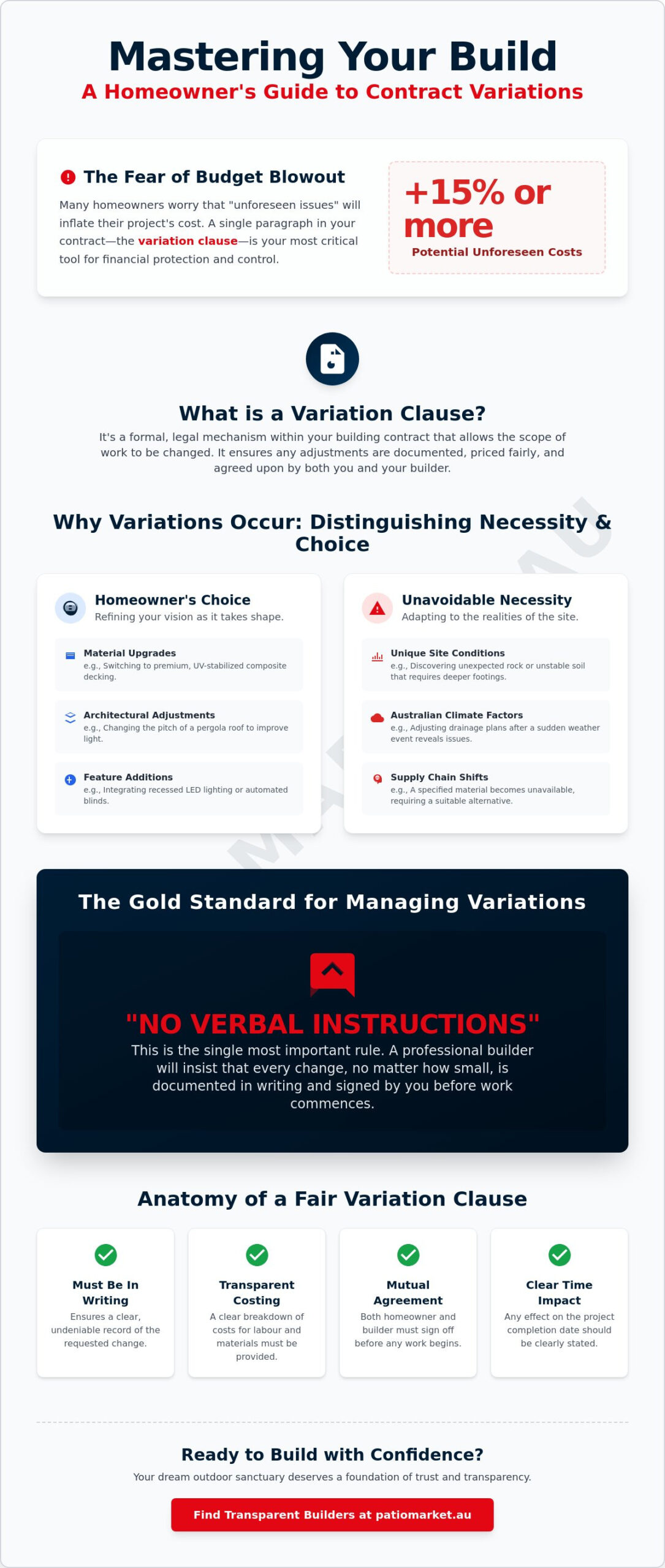
Crafting your dream outdoor retreat is a journey toward personal sanctuary, yet the structural integrity of your project relies on the fine print of your agreement. A well drafted contract ensures that the transition from a blueprint to a sun-drenched deck remains seamless and stress-free. When you are understanding variation clauses in a building contract, you must look for language that prioritises mutual consent. Every single change, whether it involves a shift in timber grade or a structural adjustment to a retaining wall, needs to be documented in writing and signed by both you and the builder before work commences.
Precision is the hallmark of professional craftsmanship. A fair clause will dictate specific timelines for notifications. In many standard Australian domestic building contracts, builders are required to notify owners of any potential variation and its impact on the schedule within 5 to 10 business days. This notification should include a clear provision for an Extension of Time (EOT). If a bespoke stone finish requires an extra week of delicate masonry, the contract must explicitly state how many days will be added to the practical completion date. Gaining a legal perspective on variation clauses helps homeowners see how risk is shared between the builder and the client, ensuring that neither party is left vulnerable to unexpected delays.
Transparency in Pricing and Margins
Clarity in costs allows you to invest with confidence. Your builder should provide a granular breakdown of expenses for any variation rather than a vague lump sum. This breakdown must include the cost of raw materials, hourly labour rates, and the builder’s margin. In the Australian market, this margin typically sits between 15% and 20%. Avoid open-ended pricing clauses that lack a cap or a defined formula. Without these guardrails, a minor design tweak can quickly escalate into a significant financial burden that disrupts the harmony of your project budget.
Red Flags in Variation Clauses
Protecting your peace of mind requires a keen eye for “hidden” traps in the fine print. Be wary of any clause that allows a builder to proceed with variations without your prior written consent. Such language strips you of your right to control the project’s evolution. Another red flag is the absence of a dedicated dispute resolution process for cost disagreements. If you and your builder cannot agree on the price of a change, the contract should point to an independent mediator or a specific adjudication path. Finally, scrutinise vague language regarding “unforeseen” site conditions. While some sub-surface issues are genuine surprises, a professional builder should use their expertise to minimise these risks through proper site inspections. Understanding variation clauses in a building contract means ensuring that “unforeseen” isn’t used as a catch-all for poor planning.
The Gold Standard for Managing Contract Variations Successfully
Creating your outdoor sanctuary should be a seamless experience, yet even the most meticulous plans often shift once the first sod is turned. Protecting your investment requires a disciplined approach to understanding variation clauses in a building contract. The most successful projects operate under a strict “No Verbal Instructions” policy from day one. While a casual chat on-site with your builder might feel productive, verbal agreements lack legal weight and frequently lead to budget blowouts. Every change must be captured in a formal Variation Order before work begins.
Before you sign off on any amendment, you must evaluate its impact on the Practical Completion date. A simple change to your stone pavers might seem instant, but sourcing premium, weather-resistant materials can add three weeks to the timeline. In the Australian building landscape, unexpected site conditions are common. Smart homeowners maintain a dedicated project budget for these moments. Following the 10% rule is essential; if your patio renovation is priced at A$40,000, keep A$4,000 in reserve to handle structural adjustments or soil issues without stress.
The Paper Trail: Documentation is Key
A standard Variation Notice is your primary tool for transparency. It’s a professional snapshot that ensures both parties remain aligned on the project’s evolution. Every notice should clearly state:
- The exact date the variation was requested.
- A detailed description of the additional work or material changes.
- The total cost in A$, including GST and any builder’s margin.
- The specific number of days added to the construction schedule.
Capture the reality of the site with photographic evidence. If a builder discovers old footings that require removal, high-resolution photos provide the context needed for cost approval. Store these images along with your digital Variation Orders in a central, accessible folder. This level of craftsmanship in your documentation mirrors the quality you expect in your finished home.
Negotiating Variation Costs
Never allow work to proceed on a “cost-plus” basis for variations if you can avoid it. Request a fixed-price quote for the change first. This allows you to compare the new costs against the original contract rates for consistency. If a builder charges A$80 per square metre for tiling in the initial contract, a variation for a small extra splashback shouldn’t suddenly jump to A$150 per square metre without a clear reason, such as specialist equipment or difficult access.
For significant structural changes exceeding A$10,000, consider seeking independent advice. A quantity surveyor or a building consultant can verify if the quoted costs align with current Australian market rates. This ensures your journey toward a perfect lifestyle space remains grounded in fair value and professional integrity.
Ready to transform your vision into a reality? Explore our curated collection of premium outdoor furniture to complete your newly renovated sanctuary.
Partnering with Professionals: How to Find Builders Who Prioritise Transparency
Creating your dream outdoor sanctuary requires more than just high-end materials; it demands a partnership built on absolute clarity. A builder’s approach to contract management serves as a direct window into their craftsmanship. When a professional demonstrates precision in their paperwork, it usually follows that they’ll show the same attention to detail when laying your decking or securing your rafters. Finding a licensed professional who values open communication ensures that your project remains a source of joy rather than a series of financial surprises.
Using a curated platform like Patio Market allows you to connect with installers who respect the nuances of Australian building law. These professionals understand that understanding variation clauses in a building contract is a shared responsibility. They provide the framework for a seamless transition from your initial vision to the final, sun-drenched result. By prioritising transparency from the first meeting, you position your project for success and protect the investment you’re making in your home’s well-being.
Questions to Ask Builders About Their Variation Process
Before signing any agreement, engage your builder in a candid conversation about potential changes. Their answers will reveal their level of professionalism and their commitment to a fair partnership. Consider these specific inquiries:
- How do you handle unexpected site conditions discovered during excavation? Ask if they conduct pre-construction soil tests or site inspections to minimise “hidden” costs like hitting hard rock or old drainage pipes.
- What is your standard margin for variations and how is it calculated? In Australia, builders often apply a percentage to cover administrative overheads and profit on additional work. Ensure this is capped at a reasonable industry rate.
- Can you provide an example of your variation documentation? A professional should show you a clear template that includes a description of the work, the specific cost breakdown, and the impact on the project completion date.
Building Your Sanctuary with Confidence
The true value of a robust contract lies in the peace of mind it provides. You shouldn’t have to worry about the “what-ifs” while you’re choosing weather-resistant furniture or planning your first garden party. The most reputable patio installers in Australia treat contract literacy as a core part of their service. They know that a well-managed project is a successful one. When you start with a fair, transparent agreement, you aren’t just building a structure; you’re crafting a lifestyle destination that will stand the test of time and the harsh Australian sun.
Secure the Vision for Your Outdoor Sanctuary
Crafting a bespoke outdoor space requires more than just premium materials; it demands a foundation of absolute clarity. By understanding variation clauses in a building contract, you safeguard your project against the uncertainty of hidden costs while ensuring every design choice elevates your home’s value. A transparent agreement prioritises written approvals for any scope changes, keeping your budget on track and your peace of mind intact. The Housing Industry Association (HIA) notes that variations must be documented in writing to be legally enforceable in most Australian states, serving as your primary protection against unexpected invoices. Seek out professionals who value craftsmanship as much as they value honest documentation.
Your journey toward a more beautiful life at home starts with a partnership built on trust. Explore our verified business listings to access expert resources on Australian building standards and connect directly with licensed patio and shade specialists across the country. Find Australia’s Most Trusted Patio Installers and Designers to begin your transformation. Your perfect Australian retreat is waiting to be built.
Frequently Asked Questions
Can a builder charge for a variation without my written consent?
Generally, a builder cannot charge for a variation unless they have obtained your written consent and provided a signed variation notice. National building contract principles and consumer protection laws typically require variations to be documented in writing and signed by both parties before work begins. This ensures your sanctuary remains a controlled investment rather than a source of financial stress. Exceptions only apply if the work is required for an emergency or if a court determines it would be unfair for the builder not to be paid.
How is the cost of a variation usually calculated in Australia?
Variation costs are typically calculated by totaling the direct cost of new materials and labor, then adding a builder’s margin which often ranges between 10% and 20%. Understanding variation clauses in a building contract helps you see how these margins are applied to the net cost. For instance, if a design change adds A$2,000 in timber and A$1,000 in labor, a 15% margin adds A$450. This transparent approach protects the craftsmanship of your outdoor space while keeping budgets predictable.
What happens if I disagree with the price of a variation?
You should immediately issue a written notice of dispute if you disagree with a variation price, as outlined in the dispute resolution clause of your contract. Most standard industry contracts require parties to meet within 7 to 14 days to resolve the issue. If negotiations fail, homeowners can contact their relevant state or territory consumer protection agency or consider mediation or tribunal services available nationally. Keeping a clear paper trail ensures your vision for a refined home stays on track without unnecessary delays.
Does a variation always result in an extension of time for the project?
A variation does not automatically grant an extension of time; the builder must specifically claim the extra days required to complete the additional work. The builder should provide an extension of time notice that details the number of days the project will be delayed, such as 5 business days for sourcing specialized weather-resistant tiles. If the variation doesn’t affect the critical path of the build, the completion date remains the same. This process maintains the rhythm of your project and ensures your sanctuary is ready for the Australian sun.
What is the difference between a variation and a provisional sum?
A variation is a formal change to the original scope of work, while a provisional sum is an estimate included for tasks where the final cost cannot be determined at the time of signing. For example, a variation occurs if you decide to upgrade to sustainable teak decking mid-project. A provisional sum might be a A$5,000 allowance for pool excavation where the soil conditions are unknown. Understanding variation clauses in a building contract allows you to distinguish between these two financial adjustments and manage your budget with confidence.
Can I cancel a variation after I have signed it?
You cannot typically cancel a variation once signed without incurring costs, as the builder may have already ordered materials or scheduled labor. Most Australian building contracts treat a signed variation as a legally binding amendment to the original agreement. If you must cancel, you are usually liable for any costs the builder has incurred plus their lost profit margin, which could total 10% or more of the variation value. It’s vital to ensure every change aligns with your lifestyle goals before putting pen to paper.
Are there limits on how much a builder can charge for a variation margin?
Australian law does not set a hard legal cap on variation margins, but industry standards generally see these figures sit between 10% and 25%. Your specific contract will dictate the percentage, and the builder cannot unilaterally increase this margin once the agreement is signed. If a builder attempts to charge a 35% margin without prior agreement, it may be deemed unreasonable under Australian Consumer Law. Checking these percentages early ensures the seamless transition from your dream design to a finished, high-end reality.
What should I do if a builder refuses to continue work until a variation is signed?
Review your contract immediately to see if the builder has the right to suspend work over a disputed variation. Under most AS4000 series contracts, a builder can only stop work if the variation is essential for structural integrity or safety. If the refusal is unjustified, you should issue a formal notice to remedy the breach within the timeframe specified in your contract, often 5 to 10 business days. This keeps your project moving toward that perfect, relaxing outdoor destination you’ve planned.