What if that artisan-tiled fire pit and custom pergola actually cost you A$45,000 in lost equity the moment the final stone was laid? As Australian construction costs have climbed by over 25% since 2021, many homeowners find themselves pouring wealth into landscapes that the next buyer simply won’t value. You likely believe your home should be a personal sanctuary, yet the fear of “sunk costs” often clouds the joy of creative design. Understanding how to avoid overcapitalising on backyard renovation is the essential skill for any homeowner looking to elevate their lifestyle without eroding their net worth.
We’re here to help you master the delicate balance between luxury and logic, ensuring your outdoor space adds significantly more value than the invoices you pay. You’ll learn how to set a firm budget ceiling based on local market data and discover which high-end finishes offer the best return on investment. This guide provides a clear roadmap to creating a sophisticated retreat that rewards you both today and on auction day.
Key Takeaways
- Elevate your outdoor lifestyle by understanding the 2026 market dynamics that transform a simple backyard into a high-value sanctuary.
- Master the essential 10% rule to set a sophisticated budget and learn exactly how to avoid overcapitalising on backyard renovation while maintaining an aspirational aesthetic.
- Identify the specific high-ROI features, such as permanent patios and weather-resistant structures, that offer a seamless transition between luxury and financial logic.
- Protect your investment through the “Master Plan” approach, ensuring professional craftsmanship translates into long-term property appreciation and lifestyle ease.
- Discover how to leverage the Patio Market directory to source verified Australian installers, ensuring transparent pricing and a premium finish for your renovation.
Understanding Overcapitalisation in the Australian Backyard Context
Imagine stepping through your bi-fold doors into a space that feels as curated and comfortable as your primary lounge room. This is the ultimate dream for many Australian homeowners in 2026. However, the line between a savvy lifestyle investment and a financial sinkhole is often thinner than a blade of buffalo grass. Understanding Overcapitalisation is the first step in ensuring your vision remains a viable asset. Essentially, it occurs when the total cost of your landscaping and outdoor structures exceeds the actual value they add to your property’s market price. In a 2026 market defined by cautious lending and high material costs, every dollar spent must be accounted for in future equity.
Learning how to avoid overcapitalising on backyard renovation requires a shift in perspective from personal desire to market demand. The psychological trap often lies in the “Sanctuary Tax”. This is the hidden cost of luxury features, like imported stone or custom water features, that provide immense personal joy but offer little return at auction. While these elements elevate your daily experience, they rarely move the needle for a valuer who is focused on comparable sales and structural utility. You must decide early if you’re building a private retreat for a lifetime or a polished product for a five year flip.
The “Additional Room” Concept as a Value Driver
The most successful renovations in 2026 treat the backyard as an extension of the floor plan rather than a separate garden. Buyers now prioritise functional square meterage above all else. By creating a seamless indoor-outdoor flow with weather-resistant materials and UV-stabilized finishes, you effectively increase the perceived size of the home. Positioning your patio as a year-round living zone, complete with integrated heating and sophisticated lighting, mimics the value of a structural room extension at a fraction of the cost. It’s about craftsmanship that serves a purpose, ensuring the space is as usable in a July frost as it is under the January sun.
The Emotional vs. Financial Investment
Balancing evocative design with the cold reality of suburb price ceilings is the hallmark of a wise renovator. It’s often safe to invest more heavily if you’re in your “forever home”, where the value is measured in decades of memories. However, if you’re looking to sell, you must respect the local ceiling. The Equity Gap in modern Australian landscaping is the measurable distance between the premium cost of bespoke materials and the rigid price ceiling of a specific suburb. To find success, focus on timeless design and sustainable teak or high-grade aluminium that promises longevity without exceeding what a typical buyer in your area is willing to pay. This disciplined approach ensures your sanctuary remains a source of wealth, not just a beautiful expense.
Setting Your Renovation Ceiling: The 10% Rule
Creating a personal sanctuary in your garden requires a delicate balance between high-end aspiration and financial pragmatism. To master how to avoid overcapitalising on backyard renovation, you must first embrace the 10% Rule. This industry standard suggests that your total outdoor investment should rarely exceed 10% of your property’s current market value. If your home in a coastal suburb is valued at A$1,800,000, a budget of A$180,000 allows for premium craftsmanship without exceeding what the local market can return. Spending A$300,000 in a neighbourhood where the price ceiling is firmly set at A$2,000,000 means you’re essentially gifting your equity to the next owner.
Current 2026 suburb data indicates that buyers are increasingly discerning about where those dollars are spent. While a designer pool might be a prerequisite in a luxury enclave, it could be a liability in a high-density family suburb where lawn space is at a premium. You should also consider the Curb Appeal multiplier. Front-of-house renovations often provide a higher psychological return than secluded backyards. A seamless, well-appointed entrance can increase a property’s perceived value by up to 5% before a buyer even steps through the front door. Before signing any major contracts, it’s wise to consult the consumer guide to renovating to ensure your planning aligns with Australian building standards and protection laws.
Researching Your Suburb Ceiling
Start your journey by filtering recent sales on real estate portals to identify the “renovation gap” in your specific street. Compare a standard three-bedroom home with an unlandscaped yard to a similar property featuring a high-end patio and garden. If the price difference is only A$100,000, then a A$150,000 renovation is a losing game. Be wary of “outlier” properties that sold for record prices; these often reflect emotional bidding rather than repeatable market value. Remember that being the “best house on the worst street” is a precarious position. Your neighbours’ lower property values will inevitably act as an anchor, dragging down the potential ROI of your luxury stone masonry or custom alfresco kitchen.
Allocating the Budget Across Zones
Focus your spending on hardscaping elements like weather-resistant decking and structural pergolas to ensure longevity and visual impact. These features act as the foundation of your outdoor lifestyle, offering a much higher ROI than softscaping, which requires constant maintenance and can look dated within a single season. It’s vital to account for the “hidden costs” that don’t add aesthetic flair but are essential for durability. Ensure your budget includes a checklist for council permits, site access fees, and UV-stabilized materials. While a designer pergola captures the eye, the invisible A$15,000 spent on sub-surface drainage adds zero dollars to your final sale price. To finish your space with pieces that reflect this same commitment to quality, consider exploring curated outdoor collections that bridge the gap between elegance and Australian durability.
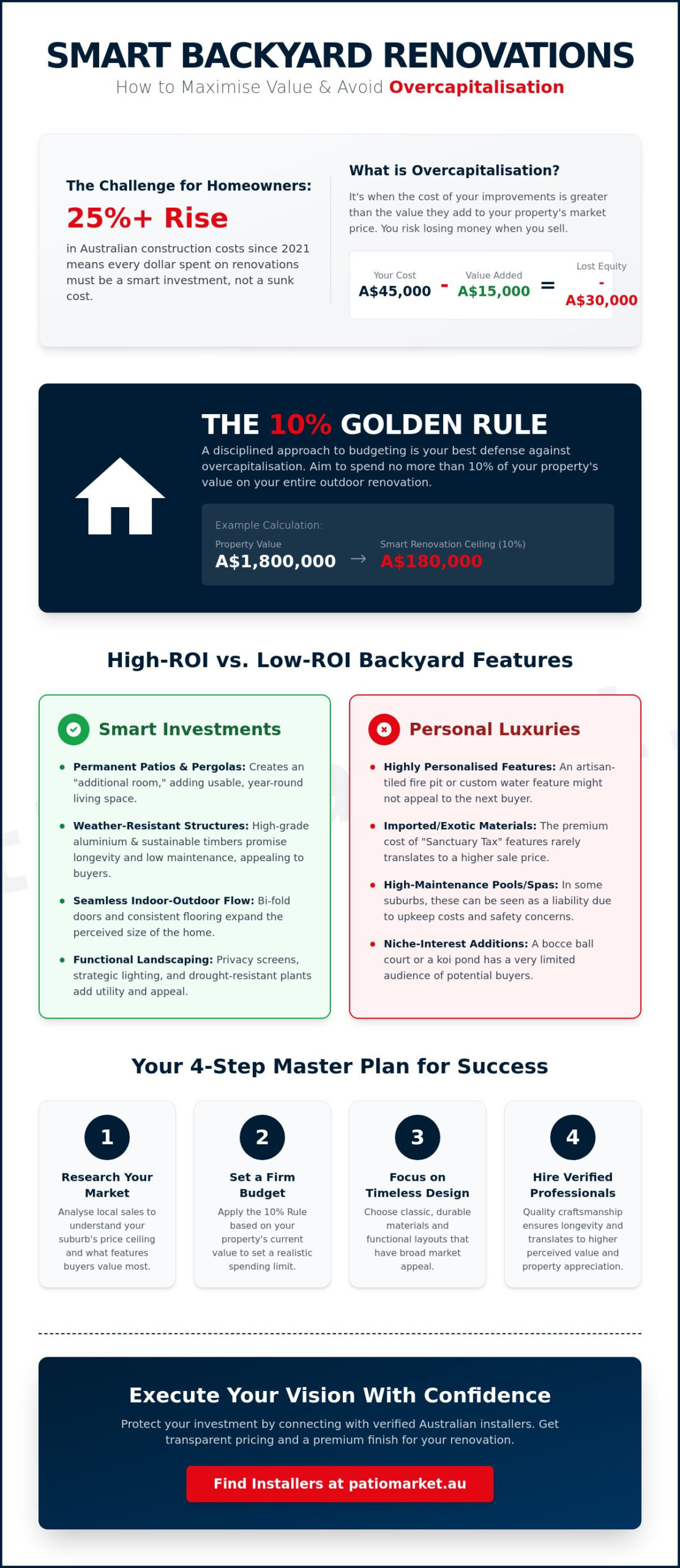
High-ROI vs. Low-ROI Backyard Features
Success in the Australian property market often hinges on the quality of the outdoor transition. When you consider how to avoid overcapitalising on backyard renovation, your focus must remain on functional longevity rather than fleeting trends. Data from the 2024 Archicentre Australia Cost Guide suggests that while cosmetic upgrades can refresh a space, only structural improvements that extend the floor plan consistently recoup their costs. A permanent patio structure offers a much higher return than a temporary gazebo; it’s the difference between a flimsy addition and a genuine architectural extension of the home.
Identify “luxury sinks” before they drain your budget. Bespoke water features and high-maintenance exotic gardens often fail to add equivalent value to the property’s final price tag. Buyers in 2026 are looking for a sanctuary that offers relaxation without the burden of constant upkeep. Investing A$15,000 into a complex, tiered fountain system might feel sophisticated, but it rarely offers the same lifestyle appeal as a well-appointed, weather-protected entertaining zone.
The Power of Patios and Outdoor Blinds
Create a second living room by investing in a high-quality patio. This space becomes a sanctuary for relaxation and a magnet for potential buyers who value the seamless flow between indoor and outdoor zones. To ensure this area remains usable through the scorching January heat and the brisk July winds, integrate UV-stabilized outdoor blinds. These additions do more than just provide shade; they significantly improve energy efficiency by reducing solar heat gain on your home’s exterior walls. Consider these high-impact, low-cost additions:
- Integrated Lighting: Subtle LED systems create an evening ambiance that doubles the hours of usability.
- Ceiling Fans: Essential for the Australian climate, these provide comfort for a fraction of the cost of structural changes.
- Weatherproofing: Quality blinds turn a seasonal deck into a year-round destination, protecting your furniture and your investment.
Pools and Landscaping: The Great ROI Debate
The 2026 market landscape shows a distinct shift in buyer priorities. While a pool was once the ultimate status symbol, many modern buyers view them through the lens of maintenance anxiety and rising electricity costs for filtration. Unless your property is in a high-end family demographic where a pool is a baseline expectation, you might find better value in sustainable landscaping. Water-wise gardens featuring native Australian flora appeal to the eco-conscious buyer and require far less upkeep than thirsty, exotic garden beds. Over-landscaping with complex garden beds often deters buyers who fear spending their weekends weeding. Stick to clean lines, durable materials, and functional greenery to ensure you don’t overspend on features that future owners might simply see as a chore.
Practical Steps to Minimise Waste and Maximise Craftsmanship
Elevate your outdoor vision by starting with a structured blueprint. A professional master plan, typically costing around A$5,000, acts as your financial insurance policy. It prevents the A$50,000 “change of mind” expenses that occur when plumbing is misplaced or structural footings aren’t aligned with future extensions. This strategic foresight is the most effective way to understand how to avoid overcapitalising on backyard renovation while ensuring every dollar spent adds tangible value to your lifestyle.
Avoid the allure of the DIY disaster. While the Australian “weekend warrior” spirit is admirable, professional installation is non-negotiable for high-end finishes. Expert trades ensure your warranties remain valid and provide the certification necessary for future resale. Buyers in 2026 will look for structural compliance and seamless craftsmanship, not a deck that sags after two summers. Invest in future heirlooms by sourcing materials like sustainable teak and weather-resistant aluminium. These elements don’t just survive the elements; they age with a grace that “budget” alternatives can’t replicate.
Timing your project is equally vital. Avoid the “Spring Rush” when builders often apply a 15% premium due to peak demand. Scheduling your renovation for a May or June commencement allows you to negotiate better rates and ensures your sanctuary is ready before the first summer heatwave arrives.
Vetting Your Trade Professionals
Use verified directories like the Housing Industry Association (HIA) or Master Builders Australia to find licensed installers. Don’t settle for a generalist. Seek out material-specific expertise; a specialist in Colorbond structures understands thermal expansion differently than a traditional timber carpenter. Local knowledge is your greatest asset. A builder familiar with your specific coastal or inland climate ensures your patio is engineered to last a decade, not just a season.
Material Selection for Longevity
Cheap materials are a primary driver of overcapitalisation because they require replacement within five years. High-quality, low-maintenance finishes like powder-coated aluminium and composite decking offer a far superior ROI. They eliminate the need for annual staining or rust treatments, keeping your sanctuary pristine with minimal effort. While local options are plentiful, looking to international leaders like Elite L.A. Patios or Brook Plants & Landscaping LLC provides insight into how premium systems and expert greenery can achieve “resilient luxury,” maintaining an opulent aesthetic despite exposure to harsh UV cycles and unpredictable rainfall.
Ready to transform your vision into a lasting sanctuary? Explore our curated collection of premium outdoor furniture designed for the Australian lifestyle.
Executing Your Vision with Patio Market
Turning a strategic plan into a physical sanctuary requires more than just inspiration; it demands the right partners. Patio Market serves as your bridge between high-end design concepts and practical execution. By centralising the search for quality trades, we help you master how to avoid overcapitalising on backyard renovation projects while ensuring every dollar spent adds tangible value to your property. Our platform streamlines the process of finding specialists who understand the balance between luxury and ROI.
Transparency is the foundation of a smart investment. Use our directory to compare verified vendors side-by-side, allowing you to secure competitive pricing without sacrificing the standard of finish. Reading detailed customer reviews provides insight into a contractor’s reliability and their ability to deliver genuine value for money in real-world Australian conditions. Before you sign a contract, run through this final checklist:
- Have you compared at least three quotes from verified installers?
- Does the chosen design align with the 10% property value rule?
- Are the materials UV-stabilized and suited for the 2026 climate?
- Have you checked the vendor’s recent project history for quality benchmarks?
A Curated Directory for Every Outdoor Need
Finding a cohesive team shouldn’t feel like a chore. Whether you need expert pool builders, professional landscapers, or outdoor blinds specialists, our directory brings the industry’s best to your fingertips. Featured listings highlight top-tier experts who’ve proven their craftsmanship across diverse Australian landscapes. You can elevate your outdoor living space with Patio Market’s trusted professionals by accessing a network dedicated to excellence and durability.
The Path to a Timeless Sanctuary
A successful renovation balances the heart and the ledger. By adhering to the 10% rule and prioritising professional craftsmanship, you ensure your backyard remains a valuable asset rather than a financial burden. Your outdoor area is the soul of the Australian home; it’s where memories are forged under the sun. Understanding how to avoid overcapitalising on backyard renovation allows you to create a space that feels like a permanent holiday. It’s time to transform your vision into a lasting legacy. Start your search for the best patio installers today and take the first step toward your personal sanctuary.
Secure Your Investment and Elevate Your Lifestyle
Your outdoor space is more than a property asset; it’s a sanctuary where life unfolds under the Australian sun. By adhering to the 10% rule and prioritising high-yield features like weather-resistant patios or integrated landscaping, you ensure every dollar spent enhances both your lifestyle and your home’s future market value. Understanding how to avoid overcapitalising on backyard renovation allows you to invest in quality craftsmanship that endures well beyond the 2026 season. You don’t have to sacrifice luxury for logic when you have access to the right expertise.
Ready to transform your vision into a seamless reality? Patio Market connects you with a verified Australian business directory of specialists who understand the nuances of local design. From expert installation resources to comprehensive listings for UV-stabilized blinds, patios, and landscaping, we provide the tools to elevate your home without financial risk. This curated platform ensures you find partners committed to durability and timeless aesthetics.
Find Australia’s Best Patio Installers and Suppliers on Patio Market and begin building your perfect retreat today. Your dream backyard is waiting to be realised with precision, poise, and the lasting comfort you deserve.
Frequently Asked Questions
What is a typical ROI for a backyard renovation in Australia?
A well-executed backyard renovation in Australia typically yields a return on investment between 50% and 80% based on 2024 real estate market benchmarks. You’ll find that creating a seamless flow between indoor and outdoor spaces adds the most significant value. Focus on high-quality materials that withstand the Australian sun; this ensures your sanctuary remains a selling point for years rather than becoming a maintenance burden for the next owner.
How do I know if I am overcapitalising on my patio?
You’re likely overcapitalising on your patio if the total renovation cost exceeds 5% of your property’s current market value. To determine how to avoid overcapitalising on backyard renovation, compare your plans with local sales data from the last 6 months. If your neighbours feature simple paved areas while you install a high-end outdoor kitchen with imported stone, you might not recoup that premium investment when it’s time to sell.
Does a swimming pool always add value to a property in 2026?
A swimming pool doesn’t always add value in 2026, especially as buyers increasingly weigh ongoing electricity costs and maintenance time against the lifestyle benefit. Data from 2025 property surveys suggests that pools add the most value in Queensland and Western Australia, where they can increase home prices by up to A$30,000. In cooler climates or on smaller blocks, they might actually deter 15% of potential buyers who prefer usable lawn space.
What are the most cost-effective ways to improve my backyard curb appeal?
Elevate your backyard’s appeal by focusing on architectural lighting and fresh mulch, which offer a high visual impact for a modest spend. Installing professional-grade LED garden lights can increase perceived value by A$5,000 for a total cost of less than A$1,200. Pruning overgrown trees and adding a fresh coat of paint to fences creates a polished look that makes the entire property feel like a curated sanctuary without the need for structural changes.
Is it better to do a backyard renovation all at once or in stages?
Renovating in stages is often the smarter choice for your cash flow, though doing it all at once can save you 10% to 15% on total labour costs. If you choose a staged approach, complete the structural elements like decking or pergolas first. This allows you to live in the space and understand the movement of the sun before you commit to final touches like furniture or specialized greenery that completes the vision.
Can I avoid overcapitalising by doing the work myself (DIY)?
You can effectively use DIY for cosmetic upgrades like planting and painting to save roughly 30% on your total project budget. However, attempting complex structural work yourself often leads to costly mistakes that decrease property value. Professional craftsmanship is essential for drainage and electrical work; poor execution in these areas can result in a 10% price reduction during building inspections when you eventually decide to sell your home.
How much should I spend on outdoor blinds for a standard patio?
Expect to invest between A$800 and A$2,500 per blind for a standard patio, depending on the fabric quality and whether you choose manual or motorised options. High-quality, UV-stabilized materials are vital for the Australian climate to ensure longevity and protect your furniture. Investing in professional installation ensures a seamless fit, which transforms your patio into a functional year-round sanctuary while helping you understand how to avoid overcapitalising on backyard renovation through durable choices.
What backyard features do 2026 buyers value the most?
Buyers in 2026 prioritize low-maintenance landscapes and integrated outdoor kitchens that function as a true second living room. Recent 2025 consumer reports show that 70% of Australian house hunters look for move-in ready outdoor spaces with built-in privacy screens. They value sustainable materials and smart irrigation systems that reduce water waste, viewing these features as essential components of a modern, sophisticated lifestyle that balances aesthetics with functional efficiency.