What if the very space designed for your restoration became a source of persistent anxiety every time the clouds gathered? You’ve likely felt that sinking feeling when a summer downpour leaves your alfresco area slick with water and your garden beds submerged. Learning how to fix poor drainage around a patio is more than a technical necessity; it’s the invisible architecture required to protect your home’s foundation and preserve the sophisticated sanctuary you’ve built.
It’s frustrating to watch mould bloom on premium pavers or worry about moisture seeping into your internal living zones. You deserve an outdoor room that remains dry and functional, regardless of the season. We’ve developed this guide to help you identify the root causes of water retention and implement elegant, long-term solutions that blend seamlessly with your landscape design.
Discover how to navigate the updated AS/NZS 3500.3:2025 standards and choose between discreet channel systems or sustainable soakwells to ensure your investment stands the test of time. From professional diagnostic tips to understanding when to engage the best landscapers or patio installers, this journey from saturation to serenity starts here.
Key Takeaways
- Master the art of the slope test to pinpoint exactly why water lingers, allowing you to address the root cause before it impacts your home’s foundation.
- Discover how to fix poor drainage around a patio using discreet channel drains and luxury grates that transform a functional necessity into a seamless design feature.
- Explore sub-surface strategies like French drains and soakwells to manage hidden water flow, ensuring your landscaping remains lush and your entertaining areas stay dry.
- Understand the critical impact of roof runoff and learn to redirect uncontrolled downpipes to protect your outdoor sanctuary from sudden deluges.
- Identify the precise moment to engage the best patio installers for professional level surveys, guaranteeing that your drainage solution is both durable and compliant with 2026 standards.
Diagnosing the Cause of Standing Water on Your Patio
Imagine your outdoor retreat, a place designed for morning reflection or evening entertaining, marred by a stubborn pool of water that refuses to clear after a summer storm. Understanding how to fix poor drainage around a patio begins with a shift in perspective; we must view drainage as a sophisticated, invisible architecture. It’s the systematic removal of both surface water, which sits visibly on your pavers, and sub-surface water, which moves through the earth beneath your feet. Without this balance, your sanctuary becomes a liability.
To begin your diagnosis, perform a simple slope test. You can use a long spirit level or observe the flow of water from a garden hose during a dry spell. If the water gathers in the centre rather than moving toward the garden or a designated drain, the levels are the primary culprit. We distinguish between ponding, where water collects in surface depressions, and seepage, where moisture rises from saturated soil. In many Australian regions, heavy clay-based soils exacerbate these issues by acting like a waterproof bowl, trapping water precisely where you want it least. This compaction prevents the earth from breathing and absorbing moisture naturally.
When you’re investigating how to fix poor drainage around a patio, you must look beyond the obvious puddles. The interplay between your hardscaping and the surrounding environment determines the longevity of your home investment. If the ground is consistently sodden, it may indicate that groundwater is being pushed toward your foundation rather than away from it.
Common Signs Your Drainage is Failing
Recognising the early warnings of failure can save your outdoor space from structural decay. Look for efflorescence, those white, powdery salt deposits that bloom on pavers as moisture evaporates from within the material. You might also notice persistent moss or slick algae growth in shaded corners, which signals that the area never truly dries. Perhaps the most telling sign is the erosion of garden beds at the patio’s edge, where uncontrolled runoff carves away your carefully curated landscaping and mulch.
The Science of the 1:100 Gradient
Effective water management relies on a precise mathematical fall. A standard gradient of 1:100 means that for every metre of patio width, the surface should drop by ten millimetres. While your patio may have been perfect upon installation, subtle shifts in the house foundation or natural soil compaction can alter these levels over time. To ensure optimal performance and compliance with Australian building standards, a patio should maintain a minimum fall of 1:100 toward a suitable discharge point. When sub-surface saturation is the primary cause, traditional solutions like French Drains are often integrated to intercept water before it reaches the surface.
Surface Drainage Solutions: Channel Drains and Grates
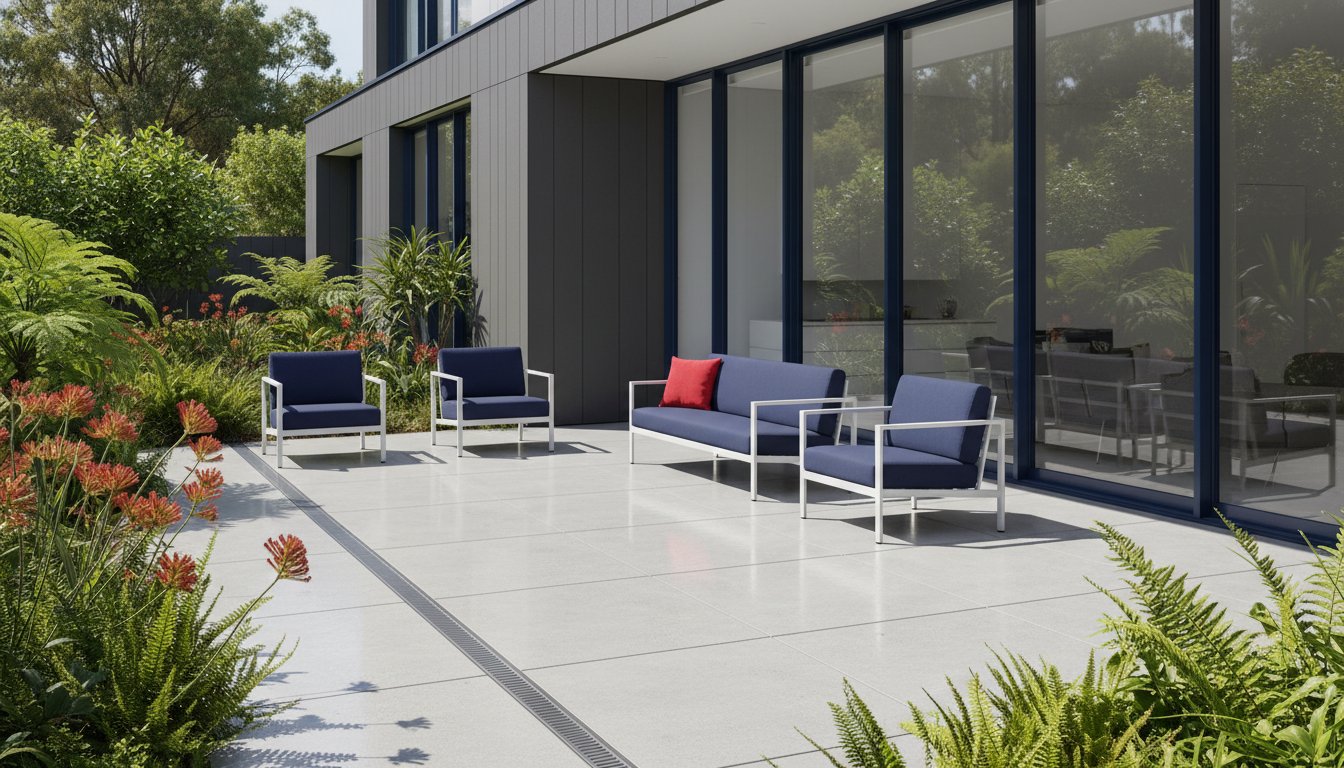
Linear channel drains serve as the elegant, high-performance boundary of your outdoor sanctuary. These systems are designed to intercept sheet flow, the thin layer of water that glides across large hardscape surfaces before it can pool or penetrate your home’s perimeter. By integrating these solutions, you’re following established Drainage management principles that balance structural protection with environmental stewardship. This invisible architecture ensures your alfresco area remains a destination for well-being, even after a heavy downpour.
When homeowners ask how to fix poor drainage around a patio, they often fear that a technical fix will ruin their aesthetic. However, modern trenching techniques allow for the seamless insertion of drainage channels even into existing pavers or concrete slabs. This process requires a steady hand and a keen eye for detail to ensure the new infrastructure feels like an intentional design choice rather than a corrective afterthought. Consulting with the best patio installers can help you navigate these technical requirements while preserving the beauty of your alfresco area.
Installing a Linear Channel Drain
The journey to a dry patio begins with precision excavation. First, you must mark the lowest point of the patio where water naturally gravitates. Next, a trench is cut into the existing surface, and the drain is set into a stable mortar bed to ensure it won’t shift underfoot. The unit is then connected to your existing stormwater system, adhering to the updated AS/NZS 3500.3:2025 standards. Finally, the surrounding area is finished with matching pavers or decorative stone to restore the visual flow of your space.
Selecting the Right Grate for Your Aesthetic
The choice of grate is where functionality meets high-end design. Stainless steel grates offer a polished, architectural finish that complements modern minimalist homes, while high-grade polymer options provide a durable and discreet alternative. For those who prioritise safety without sacrificing style, heel-guard grates are essential; their narrow apertures prevent small heels or paws from getting caught. You can match these grates to popular finishes like honed concrete or natural sandstone, ensuring the drainage system disappears into the overall landscape. These materials are chosen for their environmental resilience, standing up to the harsh Australian sun and heavy seasonal rains without losing their luster.
To maintain the effortless flow of your outdoor room, regular maintenance is vital. Debris like leaf litter or sediment can quickly compromise even the most advanced system. A simple seasonal flush with a garden hose ensures that your drainage remains as efficient as the day it was installed, protecting your investment for the long term.
Sub-Surface Strategies: French Drains and Soakwells
While surface solutions manage the visible runoff, sub-surface strategies address the silent saturation that threatens the structural integrity of your outdoor room. Sub-surface water is a hidden architect of patio failure, moving invisibly through the soil and exerting pressure on foundations. Learning how to fix poor drainage around a patio often requires a subterranean approach to intercept this moisture before it can cause pavers to sink or timber to decay. These systems act as a pressure-relief valve for your property, ensuring that even during the most intense seasonal deluges, the ground remains stable and your sanctuary stays protected.
For homeowners who blend stone elements with outdoor decking, sub-surface drainage is particularly vital. Stagnant moisture trapped beneath a deck is a primary cause of joist rot and material degradation. By installing a perforated pipe system within a trench of clean aggregate, you guide water away from sensitive timber structures. This proactive investment extends the life of your alfresco space, allowing you to enjoy the seamless transition between your indoor and outdoor living areas without the fear of hidden structural damage.
The Role of Geotextile Fabric in Longevity
Silt is the primary enemy of any sub-surface drainage system. Over time, fine soil particles migrate into the drainage trench, clogging the gaps between stones and eventually rendering the perforated pipe useless. To ensure decades of performance, you must wrap the entire drainage trench in a high-quality geotextile fabric. This material acts as a sophisticated filter, allowing water to pass through while keeping silt at bay. Selecting the right aggregate, typically a 20mm washed stone, provides the maximum void space for water flow, ensuring your system remains efficient even during high-volume events.
Managing Ground Saturation with Soakwells
In many parts of Australia, particularly where sandy soils or high-intensity tropical rains are common, a soakwell is an essential component of a responsible drainage plan. A soakwell is a large underground tank, often made of recycled polypropylene or concrete, designed to collect stormwater and slowly release it back into the water table. This process mimics natural environmental cycles and prevents your patio from becoming a catchment for local runoff. Sizing is critical; a professional levels survey can determine the necessary capacity based on your patio’s square meterage. Correct placement is equally important, as these units must be positioned far enough from the house foundation to avoid any risk of soil destabilisation or moisture ingress into the crawl space. If you are already experiencing dampness in these sub-surface areas, Subfloor Ventilation Sydney provides professional solutions to eliminate excess moisture and mould.

Managing Roof Runoff and Gutter Overspill
Think of your patio roof not just as a shelter, but as a vast catchment area that demands respect during the intense Australian storm season. While we often focus on the ground, the real volume of water often originates above our heads. A typical 40-square-metre patio roof can collect 1,000 litres of water during a modest 25mm downpour. If this volume isn’t managed, it transforms into an uncontrolled torrent that dumps directly onto your hardscaping, overwhelming your surface drains and eroding your garden beds. Understanding these hydraulics is a critical component of learning how to fix poor drainage around a patio.
Upgrading your guttering system is no longer just a maintenance task; it’s a structural necessity under the updated AS/NZS 3500.3:2025 standards. These regulations now place greater emphasis on gutter overflows and the capacity of eaves to handle short-duration, high-intensity events. By installing larger profile gutters or increasing the number of downpipes, you prevent the ‘waterfall effect’ that often leads to foundation seepage and ruined landscaping. When planning these structural shifts, consulting the best patio installers ensures your roof and drainage work in perfect harmony to protect your sanctuary.
Redirecting Downpipes for Maximum Efficiency
Uncontrolled downpipes are the primary architects of patio puddles. Instead of allowing water to spill onto your pavers, consider connecting your patio gutters directly to the main stormwater line. For a more discreet solution, underground ‘pop-up’ emitters allow water to be released safely into a lower section of the garden, away from the house foundation. These emitters remain flush with the lawn when dry and only rise when water pressure builds. Integrating leaf guards is another essential step, as they prevent organic debris from creating the very blockages that lead to gutter overspill in the first place.
Permeable Landscaping: The Natural Solution
Softening the transition between your patio and the garden can provide a functional ‘sink’ for excess runoff. Permeable landscaping, such as dry creek beds lined with river stones and native grasses, acts as a natural drainage swale that filters water back into the soil. You might also replace solid concrete borders with decorative gravel or permeable pavers that allow moisture to penetrate the ground. Planting water-hungry native species, such as Melaleuca or Callistemon, assists with soil absorption while adding vibrant life to your outdoor room. This approach, often called Water Sensitive Urban Design, ensures your drainage solution is as beautiful as it is effective. For those managing these landscapes professionally, you can learn more about Mowing Route Density to discover high-quality equipment rentals that help maintain pristine garden and lawn areas.
When to Consult a Professional Patio Installer
While minor pooling can often be addressed with surface-level adjustments, significant water retention frequently signals a deeper structural imbalance within your outdoor space. If you’ve observed persistent seepage near your home’s footings or if your pavers have visibly settled over time, these are signs that require more than a simple weekend project. Professional intervention ensures that the invisible architecture of your sanctuary remains sound, protecting both your aesthetic vision and your property’s structural integrity. When determining how to fix poor drainage around a patio, the complexity of the landscape often dictates a need for precision that goes beyond DIY capabilities.
A professional levels survey serves as the cornerstone of any successful remediation project. Expert installers use precision laser technology to map the exact topography of your outdoor area, identifying micro-deviations that the naked eye cannot detect. This data allows for a drainage design that works with gravity, ensuring water is diverted efficiently to a legal point of discharge. The best patio installers don’t just add drains; they weave them into the very fabric of your design. Whether it’s selecting a grate that mirrors the texture of your premium stone or positioning a channel drain as an architectural border, the goal is a seamless fusion of form and function.
Finding Trusted Experts via Patio Market
Finding the right partner to restore your outdoor room is effortless when you use the Patio Market directory to find local, verified installers. This curated platform connects you with professionals who understand the nuances of the Australian climate and the specific requirements of regional building codes. When you’re interviewing a contractor, ask about their specific experience with the updated AS/NZS 3500.3:2025 drainage standards. It’s also vital to verify their current licenses and insurance for drainage works, as these interventions can impact the broader stability of your property’s foundation.
The ROI of Professional Drainage Management
Investing in professional drainage management is a calculated move to protect your home’s long-term equity. By preventing moisture from compromising your foundation, you avoid the astronomical costs associated with underpinning and structural repair. Beyond mere protection, a dry and well-managed patio significantly enhances the daily liveability of your home, turning a once-avoided, damp area back into a high-value destination for relaxation and well-being. A sophisticated drainage solution is an investment in peace of mind, ensuring your outdoor sanctuary remains a lasting asset. To begin your journey toward a dry and functional alfresco space, Connect with a professional patio installer today and ensure your home investment is secured for the future.
Securing Your Outdoor Sanctuary for the Seasons Ahead
Your outdoor space represents more than a structural addition; it’s a destination for well-being and a testament to your home’s enduring value. By mastering the balance between surface channel drains and subterranean soakwells, you’ve taken the first steps toward reclaiming your alfresco retreat from the unpredictable Australian climate. Managing roof runoff and ensuring a precise gradient are technical hurdles, yet they form the essential foundation of a dry, welcoming sanctuary that stands the test of time.
When the complexity of your landscape requires a master’s touch, expert guidance is within reach. You can find a verified patio professional to fix your drainage issues through Australia’s most comprehensive directory of patio experts. This resource offers verified vendor listings with customer reviews and expert resources for every stage of your outdoor project. Addressing how to fix poor drainage around a patio becomes a seamless experience when you partner with a knowledgeable curator of design and functionality.
Take heart in knowing that a dry, functional outdoor room is an attainable luxury. Your commitment to these improvements ensures that your patio remains a place of restoration and joy for many years to come. Your sanctuary is ready for its next chapter.
Frequently Asked Questions
How do I know if my patio drainage is actually the problem?
You can identify drainage failure by observing how water behaves during and after a storm. Look for persistent puddles that remain longer than 24 hours or white, salty deposits on your pavers known as efflorescence. These visual cues, along with damp patches on adjacent house walls or moss growth in shaded corners, indicate that your current system isn’t effectively diverting moisture away from your sanctuary.
Can I fix patio drainage without removing the concrete slab?
You can often resolve these issues without a full demolition by retrofitting linear channel drains along the perimeter. By cutting a narrow trench into the existing slab, you can insert a discreet drainage system that captures surface runoff before it pools. This approach preserves your existing investment while providing a sophisticated solution to how to fix poor drainage around a patio.
What is the best type of drain for a paved patio area?
Linear channel drains with high-quality stainless steel or polymer grates are generally considered the best choice for paved surfaces. These systems excel at capturing sheet flow across large hardscape areas. For homeowners seeking a more discreet look, slot drains provide a minimalist aesthetic that blends seamlessly into the grout lines of premium pavers without interrupting the visual flow of the space.
How much slope does a patio need for proper water runoff?
A standard gradient of 1:100 is the benchmark for effective water management in Australian outdoor living spaces. This means for every metre of patio width, the surface should fall by ten millimetres toward a drain or garden bed. Maintaining this precise slope ensures that gravity does the heavy lifting, keeping your entertaining area dry and functional throughout the year.
Will a French drain help stop water from pooling on my patio?
A French drain is highly effective if your pooling is caused by saturated soil or groundwater pushing up against the patio edges. While it won’t capture water sitting directly in a surface depression, it prevents the surrounding earth from becoming a waterlogged bowl. This sub-surface strategy is essential for protecting timber decking joists and maintaining the structural integrity of your landscape.
How do I clean a clogged patio channel drain?
You should begin by removing the decorative grates and manually clearing any large debris like leaves or sediment. Once the bulk of the material is gone, use a high-pressure garden hose to flush the remaining silt toward the outlet or silt pit. Regular seasonal maintenance prevents the blockages that often lead to unexpected overspill during heavy summer downpours.
Do I need council approval to change my patio’s drainage system?
You should always check with your local council, as requirements for stormwater discharge vary significantly between jurisdictions. While minor repairs rarely need a permit, any work involving new connections to the municipal system or significant regrading must comply with AS/NZS 3500.3:2025 standards. Understanding how to fix poor drainage around a patio involves ensuring all notifiable work is performed by a licensed professional to protect your property’s long-term value.