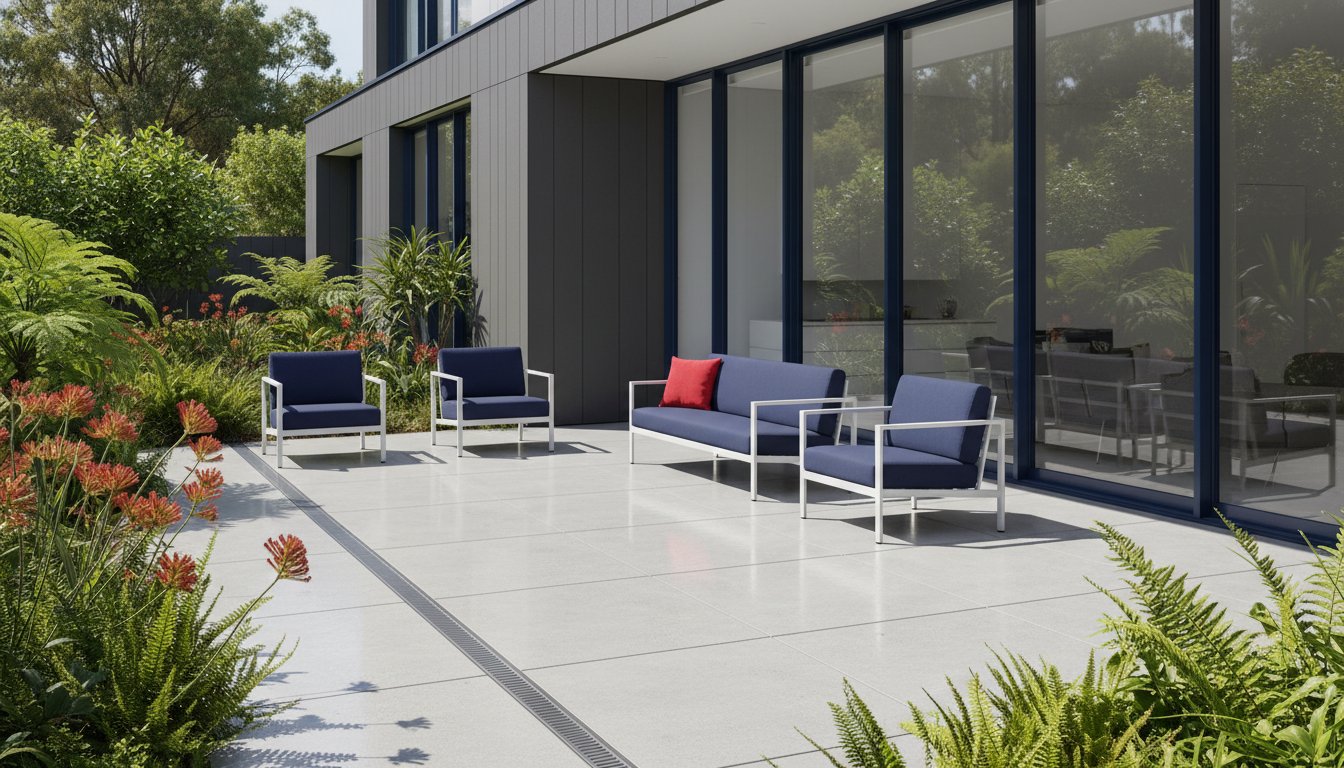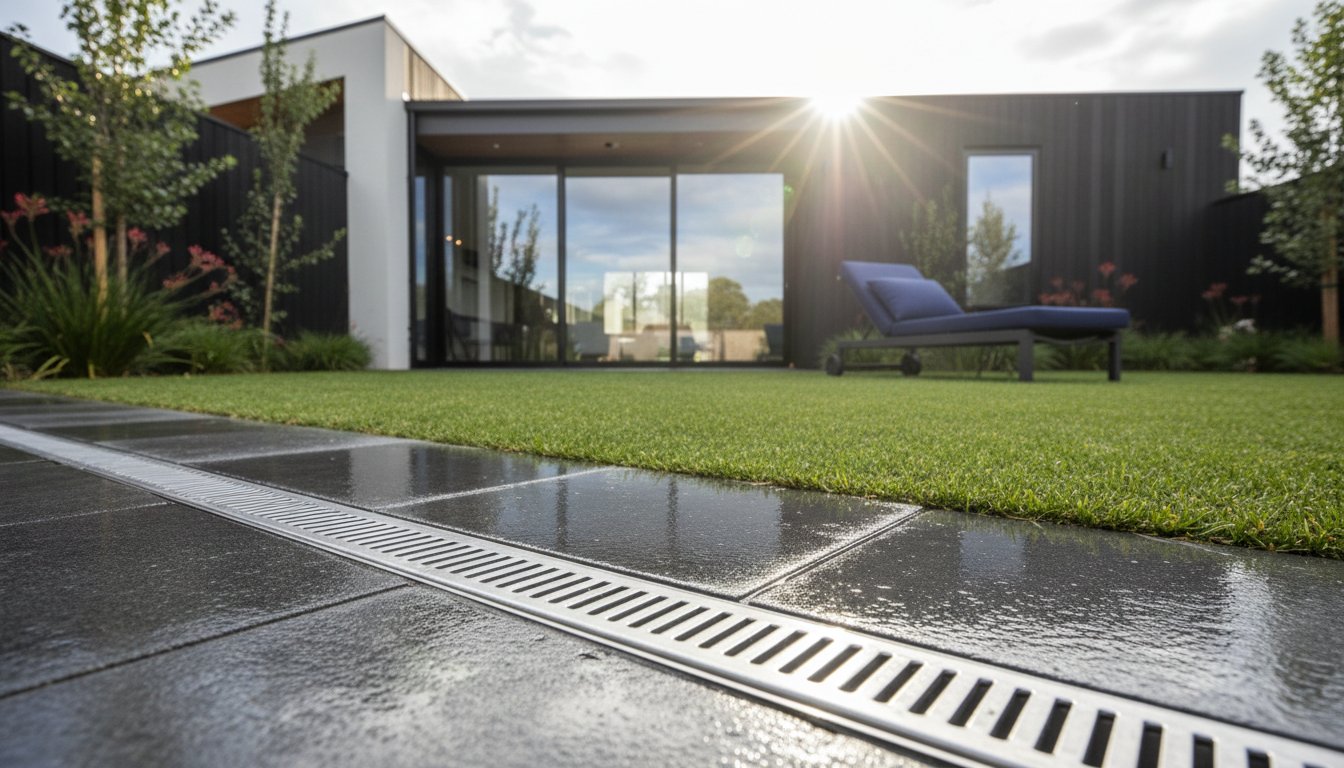
What if the most valuable square metreage of your home isn’t found within your four walls, but under the open sky? You likely dream of a space where the morning coffee tastes better and the evening Shiraz feels more refined, yet the technical hurdles of council regulations often stall the vision. It’s frustrating when the desire for high-quality outdoor decking is met with confusion over BAL ratings or the long-term durability of timber versus composite materials. According to the 2024 Houzz Australia Renovation Trends Report, 53% of homeowners now prioritise these alfresco zones as essential investments for property value.
This guide simplifies those complexities, showing you how to select materials that balance high-end craftsmanship with the practical demands of the 2026 climate. You’ll discover how to transform your backyard into a sophisticated sanctuary by mastering material selection and design principles. We’ll walk through everything from weather-resistant innovations to the expert secrets of a low-maintenance entertaining area that feels like a permanent holiday at home.
Key Takeaways
- Elevate your home’s footprint by designing a modern sanctuary that serves as a dedicated destination for well-being and relaxation.
- Master the sensory and technical differences between premium outdoor decking materials to select the perfect foundation for your lifestyle.
- Create an effortless indoor-outdoor flow using architectural design principles that unify your living spaces into one cohesive environment.
- Discover how to safeguard your investment against the intense Australian UV rays and coastal humidity for lasting beauty and performance.
- Understand the essential criteria for vetting professional installers to ensure your vision is executed with uncompromising craftsmanship.
What is Outdoor Decking? Defining the Modern Australian Sanctuary
Imagine stepping through glass bifold doors onto a surface that feels like a natural extension of your internal lounge room. To truly understand What is a deck? in the current era, one must look beyond the structural timber and see it as a destination. Outdoor decking is a precision-engineered raised platform designed to transform raw landscape into a sophisticated sanctuary for restoration. It’s the physical manifestation of a lifestyle that prioritizes well-being, creating a dedicated space where the stress of the workday dissolves into the evening breeze.
The evolution of this space has been dramatic. What began as simple, utilitarian timber porches in the mid-20th century has matured into the integrated alfresco hubs of 2026. These modern structures aren’t just additions to a house; they’re the cornerstone of Australian entertaining culture. They provide a stage for the quiet morning coffee and the vibrant weekend gathering alike, bridging the gap between the shelter of the home and the beauty of the garden.
The Functional Role of a Professional Deck
A well-executed deck serves as a masterstroke of architectural problem-solving. It levels uneven or sloping terrain, effectively reclaiming square meterage that would otherwise remain unusable or unsightly. Beyond the immediate footprint, it acts as a subtle thermal regulator. By shading the ground near a home’s foundation, a deck can reduce ambient heat transfer, assisting in maintaining cooler internal temperatures during 40-degree January peaks. This creates a seamless flow where the distinction between architecture and nature dissolves into a single, cohesive living experience.
Value Addition: Beyond Just Aesthetics
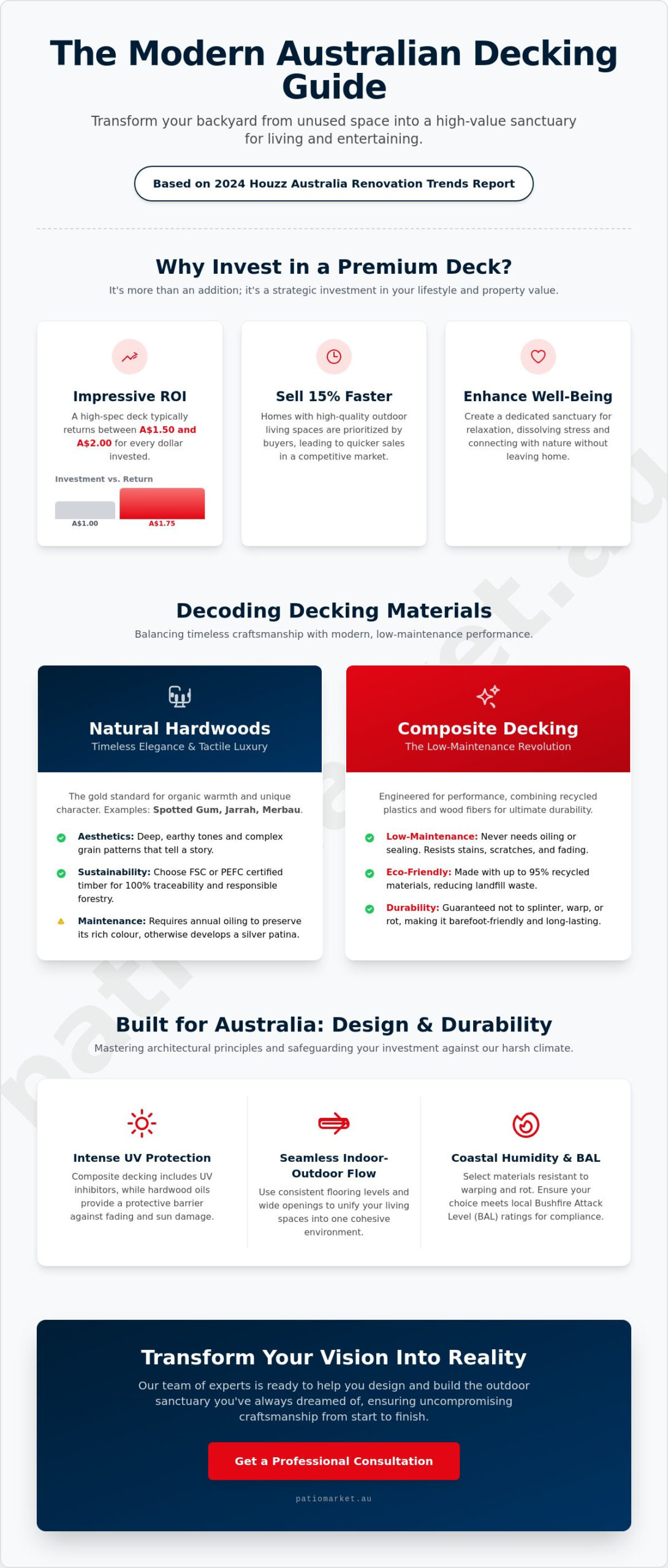
In the competitive Australian real estate market, premium outdoor decking is no longer viewed as a luxury; it’s a benchmark for valuation. Data from 2025 property analysts indicates that homes featuring high-quality outdoor transitions sell 15% faster than those with traditional backyards. The financial logic is compelling. In the 2026 Australian property landscape, a high-spec deck typically returns between A$1.50 and A$2.00 for every dollar invested, as buyers prioritize lifestyle-ready spaces over traditional internal renovations.
This investment also caters to the rising trend of multi-generational living. A versatile deck provides essential “break-out” zones, allowing different generations to enjoy the same property without feeling crowded. Whether it’s a safe play area for children, a quiet retreat for grandparents, or a dedicated modular office from Workpod, the deck ensures the home remains adaptable as family dynamics evolve over the years.
Decoding Decking Materials: A Comparison of Performance and Craftsmanship
Selecting the right material for your outdoor decking isn’t just a construction choice; it’s a sensory decision that defines the soul of your home. Imagine the organic warmth of timber underfoot or the architectural precision of cool-touch metal. In 2026, the Australian market demands a fusion of aesthetic mastery and environmental responsibility. Every choice must withstand the relentless UV index while contributing to a sustainable future. High-end decking now balances the emotional weight of a sanctuary with the pragmatic requirements of our harsh climate.
Natural Hardwoods: Timeless Elegance
Australian staples like Spotted Gum, Jarrah, and Merbau remain the gold standard for tactile luxury. These timbers offer a unique story through their complex grain patterns and deep, earthy palettes. Over time, they develop a sophisticated silver patina, though many homeowners choose annual oiling to preserve their original lustre. In 2026, we prioritize timber with PEFC or FSC certification to ensure 100% traceability and forest health. Understanding CSIRO’s role in construction materials helps us appreciate the rigorous testing these hardwoods undergo to meet local durability standards. This ensures your investment stands firm against the elements while maintaining its structural integrity.
Composite Decking: The Low-Maintenance Revolution
Modern wood-plastic composites (WPC) have evolved into high-performance art. These boards often contain 95% recycled sawdust and reclaimed plastic, making them a premier choice for the eco-conscious designer. They’re engineered to be barefoot friendly, which means they won’t splinter or warp even after a decade of coastal exposure. Unlike traditional timber, capped polymer boards offer 25-year fade and stain warranties. This ensures your sanctuary retains its rich colour without the need for constant sanding or staining. It’s the perfect solution for those who value their time as much as their aesthetic.
Aluminium and Mineral-Based Decking
For homes in high-risk bushfire regions, non-combustible materials are essential. Aluminium decking is rated for BAL-FZ (Flame Zone) areas, providing peace of mind without sacrificing style. Advanced heat dissipation technology ensures these surfaces remain comfortable, reflecting significantly more heat than traditional dark composites. These are future heirlooms, designed to last 40 years or more with minimal intervention. Integrating these materials creates a seamless transition between your interior design and the natural world outside. This level of craftsmanship ensures your outdoor decking remains a destination for well-being for decades to come.
Structural Design & The Seamless Indoor-Outdoor Flow
Lifestyle architecture isn’t just a design trend; it’s the art of crafting spaces that mirror your daily rituals. It focuses on how you move, breathe, and relax within your home. By aligning the height of your internal floors with your outdoor decking, you create a flush-threshold transition. This eliminates physical steps and visual barriers, effectively doubling your living area. It’s a design choice that transforms a simple backyard into a sophisticated sanctuary where the boundaries of the home feel limitless.
Creating a functional masterpiece requires intentional zoning. You shouldn’t view your deck as one large platform, but rather as a series of curated rooms. Consider these essential zones:
- The Culinary Hub: A dedicated dining area positioned near the kitchen for effortless hosting. For those planning a high-end grill station, you may explore Hardwood Lump Charcoal to find the perfect fuel for your new entertaining space.
- The Social Lounge: A space for deep-seated furniture and conversation, often anchored by a fire pit.
- The Quiet Retreat: A secluded corner designed for morning coffee or a moment of reflection.
Integrating technology into the deck’s infrastructure is vital for modern comfort. Recessed LED lighting and weather-resistant speakers should be planned during the structural phase to hide unsightly cables. Adding discreet strip heaters ensures your sanctuary remains a destination for well-being even during the cooler months. In 2024, industry reports showed that 68% of premium Australian renovations prioritised these integrated “all-season” features to maximise their investment.
Visual Continuity and Material Selection
Achieve a professional finish by matching your internal flooring tones with your external boards. This trick pulls the eye outward and makes the transition feel invisible. Use board orientation to your advantage; horizontal boards make a narrow space feel wider, while vertical lines draw the gaze deep into the garden. Incorporating picture framing, which is a perimeter board that runs perpendicular to the main floor, adds a level of craftsmanship that signals a truly bespoke build. For those looking to complete their entertaining vision, incorporating a bar on patio design elevates the social experience and adds a sophisticated focal point to your outdoor living space.
The Skeleton: Sub-frames and Structural Integrity
The beauty of your outdoor decking relies entirely on the strength of what lies beneath. While timber sub-frames are a classic choice, many modern Australian homes now utilise steel for its incredible longevity and resistance to warping. You must ensure adequate airflow and drainage to prevent moisture buildup and rot, especially in coastal or humid regions. Structural span is the maximum distance a beam or joist can reach between supports without sagging, and it ultimately dictates how open or cluttered your deck layout will feel.
Navigating the Australian Climate: Longevity and Compliance
Embrace the elements with confidence. Your outdoor decking serves as the foundation of your home’s sanctuary, yet it faces the world’s most demanding climate. In Australia, UV levels frequently exceed 11 on the index during peak summer; this intensity causes unprotected timber to grey and splinter within just 24 months. Humidity in northern regions can trigger structural rot in less than five years if sub-floor ventilation is poor. Coastal residents must prioritize 316-grade stainless steel fixings to combat salt-air corrosion, ensuring the structure remains sound for decades rather than seasons.
Building your dream requires more than just vision; it demands adherence to Australian Standard AS 1684. Most local councils require a formal building permit if your deck sits more than 600mm above ground level. If you live in a bushfire-prone area, your material choice is dictated by the Bushfire Attack Level (BAL) rating. For regions rated BAL-29 or higher, non-combustible materials or specific fire-retardant timbers like Spotted Gum or Blackbutt are essential for legal compliance and your family’s safety. It’s a technical landscape, but getting these details right ensures your investment is protected by law and logic.
Maintenance Frameworks for Every Material
Timber decks demand a disciplined 12-month oiling cycle to replenish natural oils lost to evaporation. Neglecting this leads to structural checking and deep cracks within three years. Composite alternatives offer a simpler path; they require only a seasonal scrub with warm soap and water to prevent organic growth in shaded corners. While DIY maintenance is common, professional refresh services every 36 months can extend a deck’s life by up to 15 years through deep-pore cleaning and precision resealing that doesn’t just mask wear but restores the original craftsmanship. To further protect your outdoor investment from the elements year-round, pairing your deck with an adjustable louvring system provides a climate-responsive overhead solution that shields surfaces from harsh UV and sudden rainfall.
Safety and Accessibility Standards
Safety defines the quality of your leisure. Wet areas like pool surrounds require a minimum P4 slip resistance rating to prevent accidents. If your deck exceeds 1 metre in height, National Construction Code (NCC) regulations mandate a balustrade at least 1 metre high with vertical gaps no larger than 125mm. These technicalities ensure that your sanctuary remains a secure environment for children and pets. Secure fixings and hidden fastener systems further elevate the space by removing trip hazards and sharp edges, creating a seamless surface that feels as good as it looks.
Design a space that balances elegance with enduring strength by exploring our curated outdoor decking collection.
Transforming Vision into Reality: Curating Your Professional Team
Turning a vision into a tangible sanctuary requires a bridge between inspiration and technical precision. While a DIY project might result in a functional platform, a professional installation creates a seamless transition that elevates your daily life. You aren’t just buying outdoor decking; you’re investing in a legacy of craftsmanship that withstands the Australian elements. Trust is the foundation of this process. It’s essential to verify that your chosen builder holds a current state-based trade licence, such as those issued by the VBA in Victoria or Fair Trading in NSW. A 2025 industry report highlighted that 88% of successful high-end builds involved contractors carrying at least A$5 million in public liability insurance.
Preparation defines the success of your first consultation. Before the builder arrives, define your primary goals for the space. Are you hosting large weekend gatherings or seeking a quiet nook for morning reflection? Collect images that resonate with your aesthetic and have a clear understanding of your investment range. This clarity allows the builder to provide an accurate quote rather than a vague estimate. Review their previous portfolio with a critical eye. Look for the precision of their mitre joints, the consistency of board spacing, and how they handle complex elevations.
The Value of Local Expertise
Local builders possess an intuitive understanding of the land that outsiders often lack. They recognize the nuances of reactive clay soils common in parts of Adelaide or the salt spray challenges faced by coastal homes in Perth. This knowledge ensures your outdoor decking substructure is engineered for stability, preventing future warping or shifting. Professional builders also leverage long-standing relationships with local timber yards and composite suppliers. These connections often result in shorter lead times for premium materials, ensuring your project stays on schedule even when global supply chains fluctuate.
- Architectural alignment with existing home structures.
- Strict adherence to AS 3959 standards for bushfire-prone areas.
- Provision of structural warranties that offer long-term peace of mind.
- Expertise in navigating local council permits and BAL ratings.
Finding Your Perfect Match on Patio Market
The search for excellence is simplified when you utilize a curated network of professionals. Patio Market serves as a bridge between discerning homeowners and the country’s most skilled artisans. The platform streamlines the process of identifying the best patio installers and the best landscapers who specialize in premium outdoor living. By browsing verified business listings, you can examine detailed customer reviews that reflect real-world experiences and project outcomes.
Every specialist listed on the directory understands the sophisticated balance between aesthetics and durability required for the Australian climate. They don’t just build structures; they curate environments that foster well-being. Choosing a verified professional ensures that your investment is protected by high standards of professional indemnity and a commitment to quality. Elevate your home today by finding a verified decking professional on Patio Market.
Craft Your Sanctuary: The Future of Australian Living
Elevating your home with premium outdoor decking is about more than aesthetics; it’s an investment in a lifestyle that blurs the lines between your interior and the natural world. In 2026, the focus shifts toward high-performance materials that withstand the Australian sun, where UV indices frequently exceed 11 during peak summer months according to the Bureau of Meteorology. Choosing sustainable, UV-stabilized timber or composite ensures your deck remains a timeless sanctuary rather than a maintenance burden. Proper craftsmanship and adherence to local building codes, such as the AS 3959 standards for bushfire-prone areas, are essential for long-term safety and value. Completing your outdoor sanctuary with a bioclimatic louvring system allows you to control light, airflow, and weather protection year-round, transforming your deck into a truly all-season retreat.
You don’t have to navigate these technical complexities alone. Finding the right partner is the final step in turning your architectural vision into a reality. Discover Australia’s Most Trusted Decking Professionals on Patio Market to access a verified directory of top-rated installers across the country. Our platform provides comprehensive listings for sustainable materials and expert resources tailored to our unique climate. Start building your legacy today and enjoy the enduring comfort of a perfectly curated outdoor space.
Frequently Asked Questions
Do I need council approval for a new outdoor deck in Australia?
Yes, you typically need council approval for new outdoor decking if the structure sits more than 600mm above ground level or exceeds 25 square metres in total area. These regulations vary between local government areas, so it’s vital to check your specific council’s Residential Design Codes. Obtaining the correct permits ensures your sanctuary is structurally sound and respects the privacy of your neighbours.
Which is better for the Australian sun: timber or composite decking?
Composite decking often survives the intense Australian UV index better than timber because it doesn’t warp, crack, or require constant oiling. While natural hardwoods like Spotted Gum offer a timeless aesthetic, they can silver off within 3 months if left untreated. High-quality composites are engineered with UV-stabilizers to maintain their deep, evocative hues for over 25 years without fading under the harsh summer sun.
How much does professional outdoor decking installation cost per square metre?
Professional installation for outdoor decking generally ranges from A$200 to A$550 per square metre depending on your chosen materials and site complexity. According to 2024 industry data from platforms like Hipages, a treated pine deck sits at the lower end of this scale. Premium hardwoods or high-performance composite systems often reach the higher price points due to their superior longevity and craftsmanship.
Can I build a deck over an existing concrete patio or pavers?
You can absolutely build a deck over existing concrete or pavers by using a specialized low-profile subframe or adjustable pedestal system. This method requires a minimum clearance of 50mm to allow for essential drainage and airflow beneath the boards. It’s a sophisticated way to elevate a tired masonry area into a warm, inviting timber sanctuary without the heavy cost of demolition.
What is the best decking material for high-risk bushfire (BAL) zones?
Non-combustible materials like aluminium or fire-rated hardwoods such as Merbau and Blackbutt are the best choices for high-risk Bushfire Attack Level zones. If your property is rated BAL-40 or BAL-FZ, you must use materials that meet the strict AS1530.8.1 Australian standards. Selecting these compliant materials protects your home while ensuring your outdoor space remains a beautiful, safe destination for years to come.
How often does a timber deck actually need to be oiled or stained?
A timber deck usually requires a fresh coat of oil or stain every 6 to 12 months to maintain its structural integrity and rich colour. Decks with full northern exposure might need attention twice a year to prevent the wood from drying out and splintering. Regular maintenance acts as a protective shield, preserving the natural beauty of the grain against the relentless cycle of rain and sun.
What is the difference between a patio and a deck?
The primary difference is that a deck is a raised platform typically built from timber or composite, whereas a patio is a ground-level space constructed from stone, pavers, or concrete. Decks are ideal for creating a seamless transition from indoor living areas on sloping blocks. Patios offer a grounded, permanent feel that integrates directly with the surrounding landscape and garden beds.
Are composite decks really ‘maintenance-free’?
Composite decks are best described as low-maintenance rather than entirely maintenance-free. You’ll never have to endure the rhythmic chore of sanding or staining, but you still need to sweep away leaves and wash the surface with soapy water every 3 months. This simple routine prevents mould growth and keeps your outdoor retreat looking pristine, allowing you more time to enjoy the sanctuary you’ve created. For those looking to take their entertaining space to the next level, exploring how to design a bar on patio can transform your low-maintenance deck into a fully equipped outdoor entertainment hub.