Your patio roof is far more than a simple overhead structure; it is the essential climate control tool that defines the soul of a modern Australian home. You’ve likely envisioned a sanctuary where the breeze flows freely, yet the reality of choosing between materials often leads to a paralysis of choice. Whether you’re worried about the sweltering heat trap effect of cheap roofing or the complex maze of local council permits, these concerns are a natural part of the journey toward a more refined lifestyle.
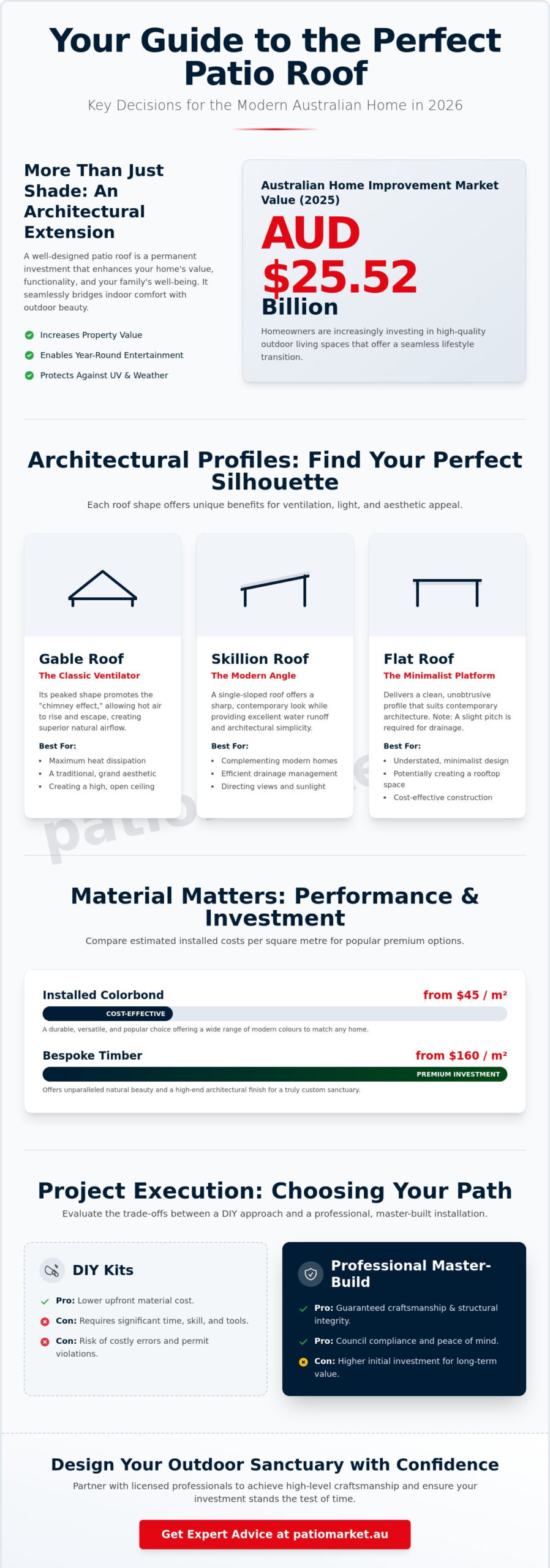
We’ll help you discover the perfect balance of form and function as we compare the leading styles and installation pathways available in 2026. With the Australian home improvement market reaching a value of AUD 25.52 billion in 2025, homeowners are increasingly investing in spaces that offer a seamless transition between indoor and outdoor living. This guide provides a clear roadmap through the costs of premium materials, from $45 per square metre for installed Colorbond to $160 for bespoke timber, ensuring you select a durable structure that adds lasting property value and year-round comfort.
Key Takeaways
- Understand why your patio roof should be viewed as a permanent architectural extension that enhances both your home’s aesthetic and your personal well-being.
- Compare the functional benefits of gable, skillion, and flat profiles to determine which design offers the best natural ventilation and thermal comfort.
- Evaluate the performance of high-end materials like Colorbond and insulated panels to ensure your outdoor sanctuary remains cool and protected against the Australian sun.
- Learn why partnering with a licensed professional is the most reliable pathway to achieving high-level craftsmanship and long-term structural integrity.
- Discover how to optimize your project plan by aligning roof styles with your home’s specific orientation and north-facing requirements.
The Role of a Patio Roof in Modern Australian Architecture
Elevate your home’s narrative by viewing the patio roof as a permanent architectural extension rather than a fleeting shade solution. In the context of sophisticated Australian design, a well-conceived structure bridges the gap between the sanctuary of the interior and the raw beauty of the landscape. To understand the evolution of these spaces, one might look at the foundational history of What is a Patio? while recognizing that in 2026, it has become a dedicated destination for well-being. This shift is reflected in global trends, where the full-pergolas and patio segment is estimated to account for 53.3% of the outdoor living structure market this year. Beyond the numbers, there’s an emotional weight to a space that truly invites you to breathe. It’s where the morning coffee tastes better and the evening wind-down feels more profound.
A thoughtfully integrated structure adds tangible market value to residential properties across the country. With the Australian home improvement market valued at AUD 25.52 billion in 2025, buyers are actively seeking residences that offer a seamless indoor-outdoor transition. This connection isn’t just about aesthetics; it’s about expanding your living footprint without the disruptive costs of a full internal renovation. Integrating a patio roof into your property design allows for a cohesive look that mirrors your home’s internal elegance while embracing the local climate.
Beyond Shade: The Functional Necessity of a Roof
Living under the Australian sun requires a shield that offers more than just a bit of shadow. A robust roof provides critical protection against intense UV radiation and the sudden, unpredictable storm seasons that define our environment. Structural integrity is paramount, especially in high-wind zones where expert craftsmanship determines the longevity of the investment. A permanent roof shields your premium outdoor furniture from sun-bleaching and creates a reliable environment for year-round entertaining, regardless of the forecast.
Aesthetic Alignment with Your Existing Home
True architectural continuity occurs when the new structure feels like it was always part of the original blueprint. Matching rooflines and pitch ensures that your addition enhances curb appeal rather than clashing with existing geometry. Color choice plays a vital role here; lighter tones reflect heat and keep the area airy, while darker hues can create a cozy, grounded atmosphere. Integrating recessed lighting and ceiling fans transforms the space into a true alfresco room, ensuring comfort even when the summer air sits still. It’s about creating a timeless heirloom for your family’s daily lifestyle.
Architectural Profiles: Comparing Gable, Skillion, and Flat Patio Roofs
Choosing the right silhouette for your patio roof transforms the way light, air, and sound interact with your home. It’s an architectural decision that dictates the atmosphere of your sanctuary, moving beyond mere coverage to define the volume of your outdoor life. While some may view these profiles through the lens of simple aesthetics, each shape serves a specific functional purpose in the harsh Australian climate. Understanding the relationship between roof height and natural ventilation is the first step in creating a space that remains cool during a 35 degree afternoon. This is often achieved through the “chimney effect,” where a higher, pitched structure allows hot air to rise and escape, drawing a refreshing cross-breeze through your living area.
Gable Roofs: The Traditional Choice for Airflow
Create a sense of grandeur and openness with the classic gable design. Its distinctive peaked shape doesn’t just mirror traditional Australian architecture; it acts as a high-performance ventilation tool. By leaving the ends open, you encourage maximum heat dissipation, ensuring that your alfresco area never feels like a stifling enclosure. For those seeking a truly premium finish, consider a Dutch Gable or a Hip Roof variation, which adds complex angles and a more integrated, master-built appearance. This architectural harmony is essential for elevating your Australian lifestyle, as it blends structural durability with a timeless visual appeal.
Skillion and Flat Roofs: Modern Efficiency
Embrace the sleek lines of contemporary design with a skillion or flat profile. A skillion roof, characterized by its single, sloping plane, is a favorite for minimalist homes because it offers a clean aesthetic while facilitating efficient water runoff. For homes with restricted attachment heights, the “Flyover” technique has become a defining trend in 2026. By attaching the patio structure above the existing house roof line, you gain significant overhead clearance and improved airflow. While flat designs are often praised for their cost-effectiveness in utility areas, they require a precise minimum pitch to prevent water pooling. Without professional oversight, low-pitch structures can inadvertently trap heat, making the selection of high-performance materials even more critical.
Designing a space that balances these technical requirements with your personal style is a journey best shared with experts. If you’re ready to move from inspiration to execution, you can connect with Australia’s best patio installers to ensure your vision is built to the highest standards of craftsmanship and compliance.
Material Performance: Colorbond, Polycarbonate, and Insulated Solutions
Selecting the material for your patio roof is a choice between distinct sensory experiences. It dictates whether you’ll hear the rhythmic drumming of a tropical downpour or enjoy a hushed, climate-controlled retreat. In 2026, the Australian outdoor living market has evolved beyond simple tin sheets. We now prioritize materials that manage the harsh UV index while providing a sophisticated finish that matches the home’s interior elegance. Each option offers a different balance of thermal reflection, light transmission, and acoustic dampening.
Colorbond steel remains the gold standard for many, valued for its legendary durability and thermal reflection. At an installed cost of approximately $45 to $55 per square metre, it’s a high-performance choice that resists the salt spray of coastal regions and the intense heat of the outback. You should consider the acoustic profile of steel before making a final decision. While many find the sound of rain on a metal roof nostalgic, others prefer the dampened serenity provided by more modern, layered solutions that minimize noise transfer during heavy storms.
The Insulated Advantage: Is it Worth the Investment?
Insulated sandwiched panels represent the pinnacle of year-round climate control. These panels feature a high-density core that significantly boosts R-values, effectively blocking the 2026 levels of radiant heat that can make uninsulated spaces unbearable by midday. Installed for between $65 and $85 per square metre, they offer a dual benefit: thermal protection and aesthetic refinement. The underside of these panels creates a “finished ceiling” look, eliminating the sight of raw rafters and allowing for the seamless integration of recessed LED downlights and concealed wiring. It’s the difference between a basic shelter and a true outdoor room that feels like an extension of your lounge.
Polycarbonate and Translucent Options
Natural light is a precious commodity, especially when a new structure risks darkening the internal rooms of your home. Polycarbonate roofing, ranging from $55 to $75 per square metre installed, offers a versatile solution. Modern polymers now feature heat-reflective technologies that block infrared heat while allowing soft, diffused light to permeate the space. You don’t have to choose between a dark patio and a hot one. Many architects now use translucent strips integrated into a Colorbond patio roof to target light exactly where it’s needed. These high-grade polymers are engineered for the Australian climate, boasting significant hail resistance and UV stabilization to ensure long-term clarity without the brittle yellowing seen in older materials.
Project Execution: DIY Kits vs. Professional Master-Built Patios
Visualizing your perfect outdoor retreat is the first step; executing that vision requires a pragmatic look at the talent and technical precision required. The decision to install a patio roof often pivots on the balance between initial cost and the enduring peace of mind that comes with professional mastery. While the digital marketplace is flooded with pre-engineered solutions, the path to a true sanctuary involves navigating structural engineering, Australian Building Codes, and the nuances of high-end craftsmanship. In 2026, a patio is no longer a simple add-on; it’s a sophisticated architectural extension that demands a high standard of execution to maintain your property’s integrity and value.
When to Choose a DIY Patio Kit
Selecting a DIY kit can be a rewarding path for experienced tradespeople or those with significant construction history. Small kits for 10-15m² spaces start from approximately $1,200, while larger, more complex kits over 30m² can range between $4,500 and $6,200. However, you must look past the “weekend build” myth. A realistic timeline for a self-build includes site preparation, structural alignment, and ensuring every fastener meets wind-rating specifications. For those without a background in the trades, a kit can quickly transition from a cost-saving exercise into a complex challenge that risks the seamless finish your home deserves.
The Value of a Verified Patio Installer
Partnering with a licensed professional unlocks design possibilities that kits simply cannot replicate. Master builders offer access to bespoke architectural features, such as curved roofs and complex angles, that integrate effortlessly with your existing home’s geometry. Beyond the aesthetic, the true value lies in managing the inevitable “red tape” of local government. In New South Wales, for instance, a patio generally avoids the need for approval if it stays under 3m in height and at least 900mm from the property boundary. Conversely, in Victoria, a permit is typically a mandatory requirement for any roofed structure.
Secure your investment by ensuring your project is handled by experts who understand these regional variations. Licensed installers provide peace of mind through QBCC or equivalent state licensing and home warranty insurance, protecting you against the hidden risks of uncertified builds. Before signing any contract, it pays to follow a thorough patio builder checklist to verify credentials, compare quotes, and confirm compliance with your local council requirements. To ensure your vision is realized with the highest level of craftsmanship and compliance, you should connect with the best patio installers in the industry. This professional pathway guarantees that your new structure is built to last as a future heirloom, rather than a temporary fixture.
Designing Your Sanctuary: Final Considerations for Your Patio Project
Synthesizing your vision into a final project plan requires a delicate balance of aesthetic ambition and structural reality. By now, you’ve explored the architectural silhouettes and material performance metrics that define a premium patio roof. The final stage of your journey involves looking beyond the immediate build to consider how the structure will interact with your specific environment over the coming decades. A truly successful sanctuary is one that anticipates your future needs, from the integration of smart technology to the eventual addition of a high-end outdoor kitchen or a custom pool; for inspiration on how these elements can work together, marlinexteriors.com showcases high-end examples of integrated backyard design. With the Australian outdoor kitchen market projected to reach a revenue of USD 713.9 million in 2025, planning for these integrated features during the initial design phase ensures a cohesive and cost-effective result.
Orientation and Microclimates
Your home’s orientation dictates the specific requirements of your roofing system. For north-facing patios, the challenge lies in managing the consistent influx of the Australian sun. While a solid patio roof provides essential shade, you must also account for the prevailing winds that characterize your local microclimate. This is why “one size fits all” kits often fall short; they cannot be adjusted to the nuances of a coastal bluff or a sheltered valley. Strategic use of automated louvres or translucent heat-reflective panels allows you to curate light and air control throughout the day. This level of customization ensures that your space remains a destination for well-being, rather than a seasonal area that is only comfortable during specific hours.
This focus on solar orientation also makes your patio roof an ideal candidate for renewable energy integration in 2026; for those researching high-end residential solar solutions, MarGav Solar provides a professional example of how expert consultancy can maximize a home’s energy efficiency.
Finding Your Perfect Partner on Patio Market
Transforming these considerations into a physical structure requires a partner who shares your commitment to craftsmanship. The Patio Market directory serves as a curated gateway to the industry’s most respected professionals, moving you away from the uncertainty of general handymen toward verified specialists. When reviewing our national listings, look for providers with a proven history of managing complex architectural profiles and high-wind zone requirements. Specialist installers bring a level of technical depth that ensures your structure is built as a future heirloom, prioritizing longevity over a quick fix.
Taking the first step is as simple as requesting a design consultation through our platform. Whether you’re seeking the best patio installers to anchor your project or the best outdoor blinds companies to provide the finishing touch of privacy, our directory connects you with experts who understand the Australian lifestyle. They don’t just provide a service; they offer the components of a better life at home. By choosing a partner from our verified network, you ensure that every detail, from council compliance to the final coat of UV-stabilized finish, is handled with the sophistication your home deserves.
Crafting Your Timeless Outdoor Legacy
Designing the ultimate alfresco retreat is an investment in your home’s future and your daily well-being. By selecting a patio roof that balances architectural grace with high-performance thermal materials, you create a sanctuary that remains comfortable through every Australian season. We’ve explored how the right profile facilitates natural cooling and why the choice between insulated panels and translucent polymers dictates the sensory experience of your space. Whether you prioritize the grandeur of a gable design or the sleek efficiency of a flyover skillion, the success of your project rests on the quality of its execution.
Your next step is to bridge the gap between inspiration and reality by connecting with professionals who share your dedication to craftsmanship. You can Browse Australia’s Best Verified Patio Installers on Patio Market to access the nation’s most comprehensive directory of outdoor experts. Our platform provides expert design resources and customer-vetted reviews, offering national coverage for all your home improvement needs. Relying on verified expertise ensures your new structure is a master-built extension that adds lasting value. Begin your journey today and transform your backyard into a destination you’ll cherish for a lifetime.
Frequently Asked Questions
Do I need council approval for a patio roof in Australia?
Yes, you generally require a building permit or planning approval for a roofed structure in most Australian states. In New South Wales, you might avoid a permit if the structure is no higher than 3m and sits at least 900mm from the property boundary. However, Victorian regulations typically require a permit for any roofed addition. It’s essential to consult your local council to ensure your project meets specific height and setback requirements.
What is the best patio roof for blocking heat?
Insulated sandwiched panels are the most effective solution for blocking radiant heat in the Australian climate. These panels utilize a high-density core to achieve superior R-values, keeping the area significantly cooler than single-skin alternatives. They also offer a sophisticated finished ceiling look that hides raw beams. This design choice simplifies the integration of recessed lighting and fans to create a truly comfortable outdoor sanctuary.
How much does a patio roof typically cost per square metre in 2026?
An installed patio roof in 2026 typically costs between $45 and $100 per square metre depending on the materials and complexity. Colorbond steel remains a popular choice at $45 to $55 per square metre installed, while premium timber structures can range from $85 to $160 per square metre. These figures reflect the investment required for a durable structure that adds significant market value to your residential property.
Can I attach a patio roof to my existing house fascia?
You can attach a structure to your fascia, but it requires specialized brackets and structural engineering to ensure the house can support the additional wind loads. Many professional installers prefer using internal rafter brackets or a flyover design for a more secure connection. This ensures the structural integrity of your home remains intact while providing the necessary clearance for a seamless transition between your indoor and outdoor living areas.
What is the difference between a pergola and a patio?
The primary difference is that a patio roof provides a permanent, waterproof cover, while a pergola typically features an open or lattice-style top. While both structures define an outdoor zone, a roofed patio offers year-round protection from rain and intense UV radiation. This makes it a more versatile architectural extension that functions as a true outdoor room for dining and relaxation regardless of the weather forecast.
How long does a Colorbond patio roof last?
A Colorbond steel roof is engineered to maintain its structural integrity and aesthetic appeal for 20 to 30 years. Its multi-layered coating is specifically designed to resist the harsh Australian sun, as well as the salt spray found in coastal regions. This durability makes it a sustainable choice for homeowners seeking a low-maintenance sanctuary that acts as a future heirloom rather than a temporary seasonal fixture.
Is polycarbonate roofing loud when it rains?
Modern polycarbonate roofing is quieter than older versions, though it does produce more noise than insulated panels during a heavy downpour. High-quality 2026 polymers feature multi-wall construction that helps dampen acoustic vibrations while still allowing natural light to filter through. If noise is a primary concern, you might consider integrating translucent strips into a solid steel roof to balance light transmission with a hushed atmosphere.
What is a flyover patio roof and why is it popular?
A flyover roof is a structure that attaches above your existing house roof line rather than at the gutter level. This technique has gained popularity because it creates additional overhead clearance and allows hot air to escape through the gap between the two roofs. The resulting “chimney effect” significantly improves natural ventilation. It creates an airy, light-filled space that feels like a grand architectural feature rather than a standard addition.