What if your backyard became the most sought-after destination in your daily life? Picture a bespoke timber pergola acting as the architectural heartbeat of your home, transforming a simple patio into a sophisticated sanctuary for well-being. You’ve likely envisioned hosting long lunches under a dappled canopy, yet the confusion surrounding termite-resistant hardwoods and the intricacies of local council regulations often makes the first step feel daunting.
It’s vital to feel confident in your investment, knowing your outdoor retreat will stand the test of time and climate. You’ll discover how to blend natural craftsmanship with architectural elegance to create the ultimate timber pergola for the Australian lifestyle. We’ll explore the best timber species for durability, simplify the permit process, and reveal the design secrets that ensure a seamless transition between your indoor and outdoor living spaces.
Key Takeaways
- Elevate your outdoor living by transforming your backyard into a sophisticated sanctuary through the architectural warmth and sensory appeal of a modern timber pergola.
- Navigate the Australian Durability Class system to select the perfect timber species that balances aesthetic elegance with long-term resilience against the elements.
- Explore the shift toward minimalist pavilion designs for 2026, featuring clean lines and hidden fixings that create a seamless transition between your home and garden.
- Master essential preservation techniques, from UV protection to end-grain sealing, ensuring your structure remains a timeless heirloom despite the harsh Australian sun.
- Streamline your project delivery by understanding local council permit requirements and accurately budgeting for materials and professional labour in A$.
The Timeless Appeal of a Timber Pergola in the Australian Landscape
Imagine stepping from your living room into a space that feels both grounded and ethereal. By 2026, the Australian backyard has evolved beyond a simple lawn; it’s now a sophisticated extension of the home’s interior footprint. A What is a Pergola? precisely? Historically, these structures provided shade and support for climbing plants, but today, a timber pergola acts as a primary architectural anchor for a multi-functional outdoor room. It defines the boundaries of your sanctuary without the confinement of solid walls, allowing the coastal breeze to circulate while providing a structured frame for your lifestyle.
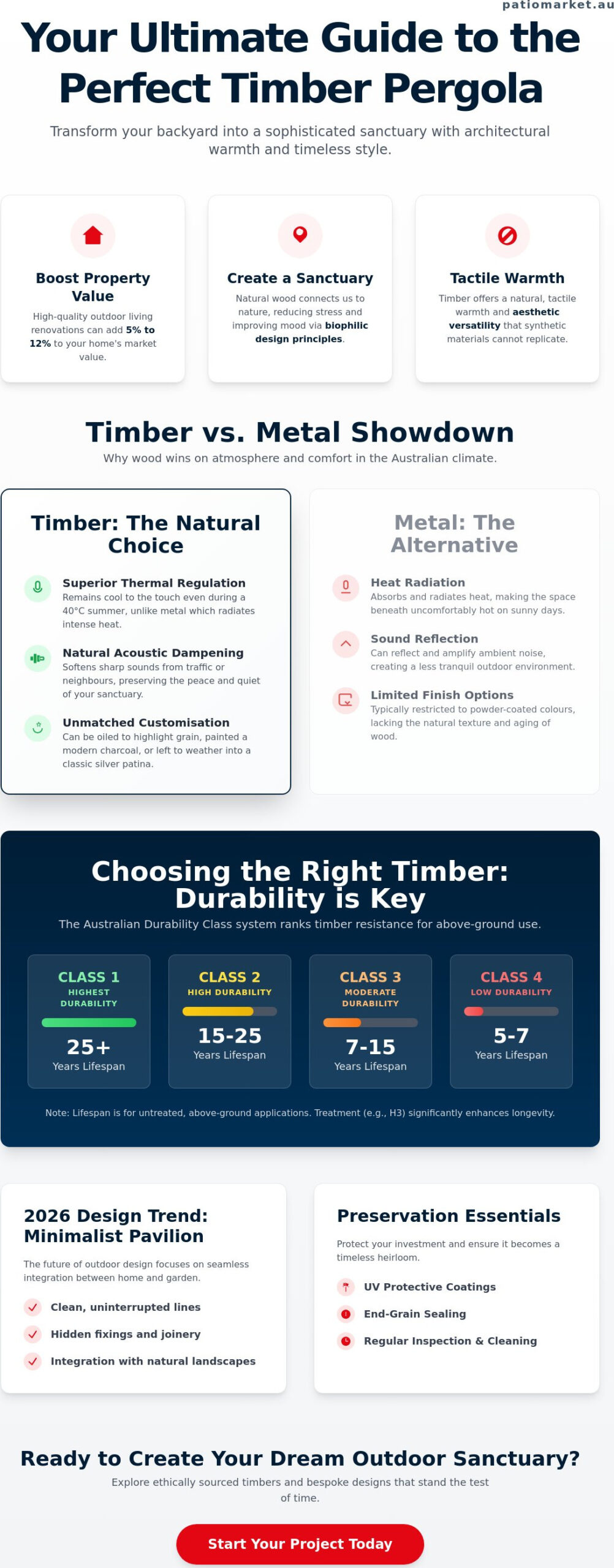
Timber offers a tactile warmth that synthetic materials simply cannot replicate. It breathes with the environment, absorbing the harsh afternoon sun rather than reflecting it back into your seating area. This organic integration is a key driver for property value. Real estate trends across major hubs like Sydney and Brisbane show that high-quality outdoor living renovations can add between 5% and 12% to a home’s market value. It’s an investment in your daily happiness that pays dividends in long-term curb appeal, creating a seamless transition that makes your home feel twice its actual size.
Crafting a Personal Sanctuary
Defining specific zones for rest or dining requires a material that feels intentional and permanent. Biophilic design principles suggest that incorporating natural wood reduces cortisol levels and improves mood by connecting our modern lives back to the natural world. Using a timber pergola to frame a relaxation zone creates a psychological destination for well-being. It’s where the scent of the wood and the play of dappled light through the rafters foster a deep sense of social connection, turning a standard backyard into a curated retreat for family and friends.
Timber vs. Metal: Why Wood Wins on Atmosphere
While aluminium offers a sleek look, timber wins on atmospheric comfort and environmental performance. Consider these distinct advantages for the Australian climate:
- Thermal Regulation: Wood possesses superior thermal properties, remaining cool to the touch during a 40-degree Australian summer, unlike metal frames that radiate heat.
- Acoustic Benefits: In busy suburban environments, timber provides natural acoustic dampening, softening the sharp sounds of traffic or neighbors to preserve your peace.
- Aesthetic Versatility: Timber allows for complete customization. You can choose a rich oil to highlight the grain, a modern charcoal paint, or allow it to weather into a classic silver patina.
The choice of wood brings a sense of craftsmanship that mass-produced metal kits often lack. It feels like a future heirloom, a permanent part of the landscape that matures gracefully alongside your garden. Whether you’re hosting a summer lunch or seeking a quiet corner for your morning coffee, the timber structure provides a sturdy, beautiful backdrop that feels like a natural part of the earth.
Selecting the Superior Timber Species for Longevity and Style
Creating an outdoor sanctuary requires more than just a vision; it demands a deep understanding of materials that withstand the Australian elements. A timber pergola serves as the structural heart of your garden, so choosing the right species is the first step toward a lasting investment. This decision balances the immediate aesthetic appeal with the long-term resilience required to handle intense UV exposure and seasonal rain. To guide this choice, the Australian Durability Class system ranks timber from Class 1 to Class 4. Class 1 species offer the highest natural resistance, often lasting over 25 years in above-ground applications, whereas Class 4 timbers may show signs of decay within 5 to 7 years if left untreated.
Sustainability has moved from a niche concern to a primary design driver. Statistics from industry reports indicate that 72% of Australian renovators now prioritize ethically sourced materials. Selecting FSC-certified timber ensures your project supports responsible forest management while adding a layer of soul to your home. Understanding timber framing durability is essential when selecting materials that will bear weight and resist moisture over decades of use. H3 treatment involves a chemical preservative process designed for timber used above ground and exposed to the weather, protecting it against decay and wood-destroying insects. If you’re ready to refine your vision, exploring a bespoke timber pergola design can help anchor your entire outdoor layout.
Hardwoods: The Premium Choice for Durability
Hardwoods represent the pinnacle of strength and sophisticated texture. Spotted Gum is a standout for its high density and natural fire resistance, meeting Australian Standard AS3959 for construction in bushfire-prone areas. Merbau is equally prized for its rich, oily composition that naturally repels rot and termites. For those seeking a contemporary palette, Blackbutt provides a stunning pale straw color. It’s a versatile choice that complements modern architectural lines while maintaining a Class 1 durability rating for external use.
Softwoods and Treated Pine: Versatility and Value
Softwoods offer a flexible entry point without sacrificing structural integrity. T3 Green treated pine is the quintessential Australian workhorse; it’s affordable, widely available, and specifically treated to resist termite attacks in backyard settings. If you prefer a natural finish, Western Red Cedar is celebrated for its dimensional stability, meaning it’s less likely to warp or twist as temperatures fluctuate. Many designers prefer treated pine for custom color schemes because its porous nature makes it the best canvas for high-quality painted finishes, allowing you to match your structure to your home’s exterior perfectly.
Inspiring Timber Pergola Designs for 2026 Homes
Elevate your home’s footprint by viewing your backyard as a curated destination rather than just a patch of lawn. A bespoke timber pergola serves as the structural heartbeat of this vision, bridging the gap between your interior comfort and the raw beauty of the Australian environment. In 2026, the most successful designs move away from generic kits toward structures that echo the specific lines of your home’s architecture. Whether your residence is a mid-century brick classic or a sharp contemporary build, matching the timber’s grain and the roof’s pitch ensures a seamless transition that adds significant value to your property.
The “Minimalist Pavilion” has emerged as a leading trend for the modern Australian garden. This style focuses on the “less is more” philosophy, utilizing hidden fixings and internal bracketry to create a structure that looks effortlessly balanced. By concealing the heavy-duty bolts and plates, the focus remains entirely on the craftsmanship of the wood itself. To truly anchor this sanctuary, homeowners are increasingly incorporating outdoor decking as a foundational element. This pairing creates a defined “outdoor room” that feels intentional, grounded, and ready for long afternoons of entertaining.
Integration with nature is also evolving. Rather than just providing shade, the 2026 pergola acts as a living trellis. Designers are now intentional about leaving specific rafters exposed to encourage climbing species like Star Jasmine or Wisteria, which naturally soften the timber’s edges and provide organic cooling during peak summer months. This biophilic approach ensures your structure feels like an extension of the garden itself.
The Coastal Chic Aesthetic
Achieve a refined Hamptons feel by opting for bleached timbers or soft white-washed finishes. This aesthetic relies on slimline rafters and open-air designs that invite the sea breeze to circulate freely. Pair your light-toned timber pergola with sand-finish paving or light-coloured stone to reflect the Australian sun. It’s a look that feels breezy and sophisticated, turning a simple patio into a high-end retreat that mimics the atmosphere of a luxury coastal resort.
Modern Industrial and Bold Geometry
For those who prefer a sense of permanence and strength, the modern industrial look offers a striking architectural statement. This design typically features:
- Thick-set 140×140 posts that command attention and provide structural gravity.
- Matte black hardware and steel-timber hybrid connectors for a sharp, masculine contrast.
- Cantilevered rooflines that defy traditional four-post configurations to create a floating effect.
These bold geometric choices work exceptionally well in urban settings, providing a sophisticated backdrop for evening dinner parties under the stars.
Engineering for the Elements: Durability and Maintenance Essentials
Build your sanctuary with a foundation of resilience. A timber pergola must withstand the brutal Australian UV index, which frequently peaks at 11 or higher during the summer months. To ensure structural integrity, every design should adhere strictly to AS 1684 standards for residential timber-framed construction. This code dictates the specific spans and connections required to keep your structure safe during high-wind events and heavy rain, ensuring the craftsmanship lasts for decades.
Protect the bones of your structure by sealing end-grains during the assembly phase. End-grains act like straws, drawing in moisture that leads to internal rot; applying a high-quality wax-based sealer can reduce moisture absorption by up to 90%. Termite management is equally vital in the Australian landscape. Integrating physical barriers like termite shields or regular chemical soil treatments according to AS 3660.1 protects your investment from subterranean threats that can compromise the timber’s core without visible warning.
The Maintenance Ritual: Preserving the Glow
Maintain the warmth of your timber through a dedicated care routine. Oil-based stains penetrate deep into the wood fibers to nourish the material, while water-based alternatives offer superior UV resistance and color longevity. Look for early signs of weathering, such as darkening patches or “silvering” where the sun has bleached the lignin. A seasonal checklist ensures your retreat remains pristine:
- Wash away salt spray and dust every three months to prevent surface abrasion.
- Inspect joints for movement or loose fixings annually to maintain structural rigidity.
- Apply a fresh topcoat every 12 to 24 months to maintain the deep, rich glow of the grain.
Smart Additions for All-Weather Use
Enhance the versatility of your pavilion with integrated technology. Retractable shade sails provide flexible UV protection that adapts to the shifting sun, while hidden LED strips and integrated radiant heaters extend the usability of the space into the cooler months. If you’ve chosen a solid-roof design, installing guttering and downpipes is essential to prevent soil erosion and water pooling around the timber posts. These functional details ensure the transition between your indoor and outdoor life remains seamless regardless of the season.
Create a lasting legacy in your backyard with a designer timber pergola that balances form and function.
Planning Your Timber Pergola Project: From Vision to Reality
Transforming your vision of a timber pergola into a tangible sanctuary requires a blend of creative flair and logistical precision. You must first address the regulatory landscape of your specific Australian suburb. Local council permits vary significantly across states. In New South Wales, for example, a structure may fall under exempt development if it is smaller than 25 square metres and meets specific height requirements. Checking these codes early prevents costly teardowns and ensures your investment is legally sound from the first post installation.
Budgeting for a premium timber pergola involves balancing material quality with expert craftsmanship. For a standard 3×4 metre structure using high-grade Australian hardwoods like Spotted Gum or Ironbark, expect to invest between A$4,500 and A$9,000 for materials and professional labour. While DIY kits might tempt the budget-conscious homeowner, they rarely offer the structural longevity or bespoke aesthetic of a custom build. Professional installers bring the tools and experience to manage tricky site slopes and ensure every joint is flush, creating a structure that feels like a permanent extension of your home architecture.
Consulting the Experts
Your first meeting with a builder sets the tone for the entire project. Come prepared with a site plan, photos of your existing outdoor area, and a clear idea of how you intend to use the space. Ask potential contractors for their current building license number and proof of public liability insurance. Most high-end projects follow a timeline of six to ten weeks. This period accounts for initial design approvals, material seasoning, and the meticulous construction phase that defines a luxury outdoor destination.
Taking the Next Step
Finalise your design by observing the sun path across your backyard during peak summer hours. This data allows you to angle your rafters to provide maximum relief from the afternoon heat while still inviting in the gentle morning light. Once the skeleton of your timber pergola is complete, focus on the sensory details. Choose weather-resistant furniture with textures that complement the natural grain of the wood to create a cohesive environment. You can start your journey by connecting with the best patio installers in our directory to find a specialist who shares your commitment to quality and timeless Australian design.
Transform Your Vision into a Lasting Legacy
Creating a refined outdoor retreat requires more than just an aesthetic eye; it demands an understanding of how premium materials interact with the intense Australian sun. By selecting weather-resistant species and prioritizing structural engineering, you ensure your timber pergola remains a centerpiece of your home well beyond 2026. These structures represent a seamless transition between your interior comfort and the natural world, offering a sanctuary that balances modern design with rugged durability. Whether you are leaning toward a minimalist architectural frame or a lush, traditional build, the focus remains on quality craftsmanship that withstands local environmental demands.
Your journey toward a sophisticated backyard destination begins with the right expertise. Explore Australia’s leading patio and pergola specialists on Patio Market to access our expertly curated outdoor resources and verified business listings. As Australia’s comprehensive directory for patio living, we connect you with professionals who understand the nuances of high-end home improvement. Start planning your project today to elevate your lifestyle and enjoy the timeless joy of a perfectly executed outdoor sanctuary.
Frequently Asked Questions
Do I need council approval for a timber pergola in Australia?
Most Australian jurisdictions require council approval if your timber pergola exceeds 10 square meters or stands taller than 2.4 meters. Under the NSW State Environmental Planning Policy 2008, structures meeting specific size and setback criteria may be exempt from formal applications. You should always consult your local council or a private certifier before commencing construction to ensure your sanctuary meets all 2026 safety standards and boundary regulations.
Which timber is best for a pergola in a high-humidity climate?
Select durable Australian hardwoods like Spotted Gum or Ironbark for high-humidity coastal environments. These species possess a Class 1 durability rating under AS 5604-2005, providing natural resistance to rot and fungal decay. Merbau is another excellent choice due to its high tannin content and natural oil density. These premium materials ensure your timber pergola maintains its structural integrity and rich aesthetic even when exposed to relentless moisture.
How long does a timber pergola typically last?
A professionally installed structure crafted from Class 1 hardwoods typically lasts between 20 and 30 years in Australian conditions. Using H3 or H4 pressure-treated pine can also offer a lifespan of 15 to 20 years when maintained correctly. Longevity depends heavily on the quality of the initial seal and the exclusion of direct ground contact. Investing in high-grade craftsmanship ensures your outdoor retreat remains a timeless heirloom for decades of family gatherings.
Can I build a timber pergola myself with a kit?
You can certainly build a pergola using a pre-cut kit if you possess basic carpentry skills and a standard toolset. Most kits include precision-milled components and galvanized hardware designed for straightforward assembly over a single weekend. While DIY saves on labor costs, many homeowners hire licensed builders to ensure the structure is perfectly level and compliant with the Building Code of Australia. This professional touch guarantees a seamless finish for your home.
What is the difference between a pergola and a gazebo?
The primary difference lies in the roof structure and the level of shelter provided to your outdoor space. A pergola features an open-beam roof designed to support climbing vines or provide filtered sunlight, creating a breathable, dappled sanctuary. Conversely, a gazebo is a freestanding structure with a solid, permanent roof that offers full protection from rain. Pergolas excel at defining outdoor rooms while maintaining an airy, connected feel within your garden landscape.
How often should I restain my timber pergola?
Plan to restain your timber structure every 12 to 24 months to preserve its deep luster and UV protection. Australia’s intense solar radiation breaks down timber fibers and pigments quickly, especially on horizontal surfaces like rafters and beams. You’ll know it’s time for a fresh coat when water no longer beads on the wood’s surface. Regular maintenance prevents silvering and ensures the timber remains a vibrant, sophisticated focal point of your outdoor living area.
Are timber pergolas fire-resistant for bushfire-prone areas?
Standard timber isn’t inherently fireproof, but you can use specific fire-retardant species if you live in a Bushfire Attack Level rated area. Species such as Blackbutt, Spotted Gum, and Red Ironbark are officially recognized by AS 3959 as fire-resisting timbers suitable for BAL-12.5 and BAL-19 zones. Using these specific hardwoods allows you to create a beautiful, compliant sanctuary without compromising on the organic warmth or the safety of your Australian home.