Designing a bar on the patio is far more than a simple aesthetic choice; it’s a structural lifestyle investment that requires precise engineering to endure the intensity of the Australian sun. You likely envision those long, golden afternoons where the transition from your indoor kitchen to your outdoor lounge feels entirely effortless, yet the fear of UV-faded materials or the complexity of local council approvals can often stall the dream. It’s natural to feel hesitant about whether a DIY approach can truly deliver the sanctuary you desire or if the harsh climate will warp your investment within a single season.
This guide will help you navigate these challenges to transform your outdoor area into a sophisticated entertainment sanctuary through expert design and material selection. You’ll discover how to elevate your home with durable, weather-resistant craftsmanship that adds genuine property value and lasting beauty. We’ll explore the 2026 shift toward earthy palettes and organic textures, provide clarity on the latest National Construction Code requirements, and offer a clear plan for connecting with the best professional installers to ensure your vision is built to last for generations.
Key Takeaways
- Master the art of the “Outdoor Room” by choosing a design style that bridges the gap between interior luxury and the raw beauty of the Australian landscape.
- Learn to select high-performance, weather-resistant materials like marine-grade cabinetry and engineered stone to ensure your bar on patio remains a timeless sanctuary.
- Discover how to effectively zone your space for seamless entertaining, using clever privacy solutions and ergonomic layouts that prioritize both flow and comfort.
- Gain clarity on the regulatory landscape and the essential role of licensed professionals in executing a safe, compliant, and value-adding home improvement project.
- Access a curated path to perfection by understanding how to leverage verified directories to find the right specialists for your specific design needs.
Elevating Your Sanctuary: The Allure of a Bar on the Patio
Imagine the gentle hum of conversation as the sun dips below the horizon, casting a warm, amber glow across your backyard. This is the essence of the modern sanctuary, where a beautifully crafted bar on patio serves as the sophisticated bridge between your interior luxury and the raw, restorative power of the outdoors. By 2026, the Australian home has evolved beyond the simple backyard. We now view our external areas as vital destinations for well-being, moving away from temporary setups toward permanent, multi-functional zones that act as secondary kitchens and social hubs.
Creating a dedicated entertainment zone offers profound psychological benefits. It provides a mental reset, a place where the stresses of the day dissolve into the rhythm of nature. Unlike a mobile cart that feels like a temporary addition, a permanent bar structure anchors the space. It signals a commitment to the art of hosting and personal relaxation, turning a standard backyard into a curated retreat that invites you to linger longer under the Southern Cross.
The Seamless Transition: Indoor Style Meets Outdoor Durability
Biophilic design principles are at the heart of this evolution, emphasizing the innate human connection to the natural world. By using materials that echo the surrounding environment, a bar on the patio extends your home’s floor plan without the jarring visual break of traditional boundaries. When exploring the foundational question of What is a Patio?, we see it defined as an outdoor space used for dining or recreation; yet in the modern Australian context, it has become a high-end extension of the living room. This architectural fluidity allows for a sensory experience where the scent of jasmine and the cool touch of stone countertops coexist beautifully. The alfresco lifestyle represents the absolute pinnacle of Australian residential design, blending effortless elegance with the rugged demands of our unique climate.
Property Value and the Entertaining Factor
Investing in a permanent bar structure is a strategic move for any homeowner focused on long-term property appraisal. While seasonal furniture may fade and require replacement, a built-in bar is viewed as a future heirloom that adds tangible value to the home’s footprint. Buyers in 2026 are increasingly looking for “turn-key” outdoor lifestyles, where the infrastructure for hosting is already seamlessly integrated into the landscape. This structural commitment often yields a superior return on investment compared to mobile alternatives, as it demonstrates a level of craftsmanship and permanence that resonates with the market. Beyond the financial gains, the social benefits are immeasurable. Hosting friends in a space that feels both professional and deeply personal fosters a sense of community and joy, making your home the preferred destination for every milestone celebration.
Defining Your Aesthetic: Popular Design Styles for Outdoor Bars
Selecting the right aesthetic for your bar on patio is a deeply personal decision that dictates the emotional frequency of your entire outdoor area. It’s about more than just matching colors; it’s about curating a vibe that resonates with your lifestyle. Whether you’re drawn to the crisp precision of a contemporary gallery or the rugged warmth of a mountain lodge, your design should feel like a natural evolution of your home. When designing your outdoor space, consider how the visual weight of your bar interacts with the existing architecture to create a unified, high-end sanctuary.
Modern Minimalist: Clean Lines and High Function
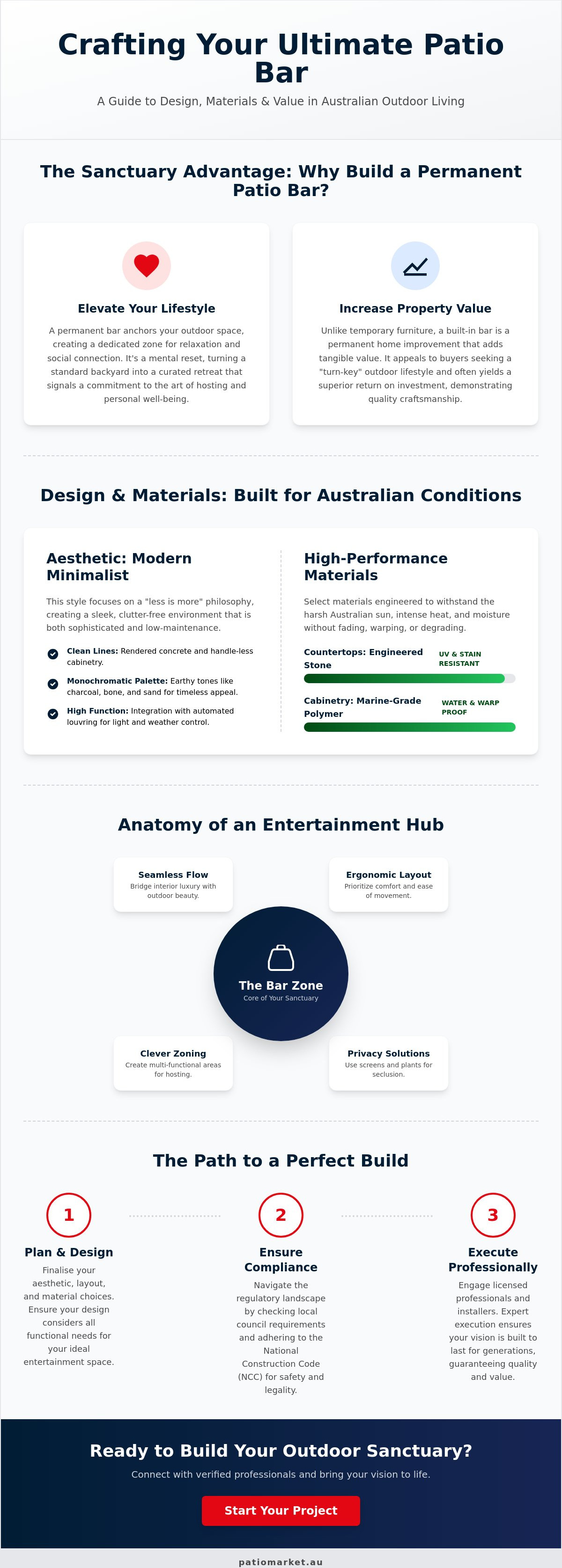
The Modern Minimalist approach focuses on the “less is more” philosophy, utilizing rendered concrete and handle-less cabinetry to create a clutter-free environment. This style thrives on monochromatic palettes of charcoal, bone, and sand that resist visual aging and maintain a timeless appeal. Pairing these sleek, architectural bars with automated louvring systems allows you to control light and shadow, giving the space a high-tech, polished finish. It’s a look that prioritizes durability and effortless maintenance without sacrificing a shred of sophistication.
The Rustic Retreat: Incorporating Natural Elements
For those who crave a connection to the earth, the Rustic Australian style celebrates raw beauty through reclaimed timbers and heavy stone accents. Using high-density hardwoods like Spotted Gum or Ironbark ensures your bar on patio can withstand the intense UV levels of the local climate. Integrating stone masonry into the base of the bar makes the structure feel like a permanent, ancient part of the landscape. To keep the timber looking its best, apply UV-stabilized oils annually to maintain the timber’s richness and prevent the silvering effect caused by harsh sun.
In 2026, we’re also seeing a surge in “Coastal Sanctuary” and “Industrial Chic” designs. The coastal look leans heavily on organic textures, bleached teak, and white-washed stone to evoke a sense of permanent vacation. Conversely, the industrial trend uses recycled red brick and matte black steel finishes for a bold, urban edge. No matter which direction you choose, ensure your materials are rated for the elements. If you’re unsure which look best suits your property, consulting with the best landscapers can help you visualize how different textures will play against your existing garden and pool zones.
Built to Last: Selecting Weather-Resistant Materials for Australian Climates
Your bar on patio must do more than just look inviting; it has to survive the relentless cycle of the Australian climate. From the blistering UV rays of summer to the salt-heavy breezes of the coast, every component requires a level of engineering that goes beyond standard indoor furniture. Selecting the right materials is an act of craftsmanship that ensures your sanctuary remains a point of pride for years to come. For visual inspiration on how these materials come together, browsing Australian outdoor bar design ideas can help you see how high-end finishes perform in real-world settings.
Countertop Selection: Beauty vs. Durability
The countertop is the workhorse of your entertainment zone. While granite offers a classic, natural appeal, it’s porous and requires regular sealing to prevent staining. For a truly low-maintenance experience, Dekton or high-quality engineered stones are superior choices because they offer near-zero porosity and exceptional thermal shock resistance. Polished concrete provides a rugged, architectural feel, yet it’s prone to hairline cracks if not poured correctly. Stainless steel remains the professional benchmark for hygiene and longevity. If you choose metal, ensure it’s 316 marine-grade stainless steel, especially if your home is within five kilometres of the ocean, to prevent tea-staining and corrosion.
Cabinetry and Framework: The Skeleton of Your Bar
The internal structure of your bar is where many projects fail. Standard timber framing, even if treated, can succumb to rot or warping over time. Aluminium frames are the modern standard for structural integrity because they’re lightweight, fire-resistant, and entirely immune to termite damage. When building near salt-water pools, ensure all metal components are powder-coated to provide an extra layer of protection against the air. Your cabinetry should be constructed from marine-grade polymers or high-pressure laminates specifically designed for external use. These materials utilize UV-stabilized technology to prevent the fading and “chalking” that often ruins cheaper alternatives. Don’t overlook the hardware; only use soft-close hinges and drawer slides rated for outdoor environments to avoid seized mechanisms after a single winter.
Integrating your bar with your existing outdoor decking requires careful planning for weight distribution and drainage. A fully equipped bar with stone tops can be remarkably heavy, so your deck’s substructure might need reinforcement to meet Australian Standards like AS 1684. Proper drainage is equally critical. Ensure the bar’s base allows for airflow and water runoff to prevent moisture from pooling against your decking boards, which can lead to premature decay even in the most durable hardwoods.
The Anatomy of Entertainment: Zoning and Essential Features
Zoning your bar on patio requires a thoughtful eye for movement and social dynamics. A truly sophisticated outdoor sanctuary doesn’t just happen; it’s designed to guide guests through different emotional experiences. By separating the high-energy bar area from your quiet relaxation zones, you create a sense of purpose for every square metre. This spatial hierarchy ensures that the clink of glasses and the hum of the blender don’t disrupt those seeking a moment of peace in the garden. Integrating aluminium slat fencing directly behind the bar structure provides a contemporary backdrop that defines the space while shielding your sanctuary from prying eyes. It’s a functional design choice that adds architectural depth and secures the “outdoor room” feel that 2026 homeowners crave.
Utilities form the invisible backbone of your entertainment hub. Planning for plumbing, electricity, and drainage is a technical necessity that should never be an afterthought. Running these essential services typically adds between $1,000 and $5,000 to a project, but the convenience of a plumbed sink and reliable power for appliances is what elevates a simple counter into a professional-grade bar. Lighting plays an equally vital role in night-time safety and mood. You must balance bright task lighting over the preparation areas with soft, dimmable ambient lighting around the seating. This duality allows you to craft the perfect atmosphere, moving from a vibrant cocktail hour to a low-lit, intimate evening retreat with the flick of a switch.
Seating and Comfort: Creating a Destination
The comfort of your guests is the ultimate measure of your bar’s success. Choose ergonomic bar stools crafted from weather-resistant materials like powder-coated aluminium or sustainable teak to ensure longevity. For a true resort-style feel, consider pairing your bar seating with daybeds for outside positioned nearby, allowing the social energy to flow from the bar to a more relaxed lounge setting. For guest comfort, ensure you allow at least 600mm to 750mm of clearance between bar stools so that movement remains effortless and the conversation never feels cramped.
Integrated Technology and Appliances
Modern luxury is defined by seamless technology. Your bar on patio should feature appliances specifically rated for the Australian climate, such as outdoor bar fridges that range from $500 to $2,000. These units are engineered to maintain consistent temperatures even when the ambient heat climbs. Sound system integration is another essential feature; hidden, weather-proof speakers can be tucked into the cabinetry to provide a rich auditory experience without cluttering the aesthetic. With smart home connectivity, you can now control your bar’s cooling, lighting, and music via mobile apps, ensuring your sanctuary is perfectly prepared before you even step outside. To ensure these complex systems are integrated with precision, it’s wise to consult with the best patio installers who understand the nuances of outdoor engineering.
Bringing the Vision to Life: Planning and Professional Execution
Moving from the conceptual phase to the physical build is the most critical juncture in your journey toward a permanent bar on patio. While the allure of a DIY project is strong for many Australian homeowners, the technical complexity of integrating gas lines, structural drainage, and heavy stone surfaces often requires a licensed touch. A basic setup might cost between $5,000 and $10,000, but premium, custom-built sanctuaries can range from $30,000 to over $50,000. Navigating this investment requires a clear plan that balances your aspirational lifestyle with the pragmatic realities of local construction standards.
The timeline for a professional build typically spans four to twelve weeks, depending on the complexity of your design and the speed of council approvals. In Australia, permanent roofed structures usually require a two-stage approval process: Planning Approval from your local council for size and location, followed by Building Approval to ensure compliance with the National Construction Code. Finding the right experts to manage these nuances is simplified through curated directories that connect you with the best patio installers and best landscapers in your region. These specialists understand the specific wind loads and timber framing standards, such as AS 1684, that ensure your bar remains a future heirloom rather than a seasonal fixture.
Vetting Your Team: What to Look For
Check the credentials of any potential builder with a focus on their experience with outdoor-specific engineering. Ask to see a portfolio of recent Australian projects that have weathered at least two summers to see how their material selections have performed under intense UV exposure. A reputable contractor will provide a transparent quote that details plumbing and electrical costs separately, as running these utilities can add $1,000 to $5,000 to your total. Be wary of quotes that seem unusually low or installers who dismiss the need for licensed plumbers and electricians; these are significant red flags that could compromise both your safety and your property’s future resale value.
The Final Touches: Styling Your New Space
Once the structural work is complete, the focus shifts to the sensory details that transform a house into a home. Curate your bar with outdoor-safe glassware and accessories that mirror the sophisticated palette you’ve chosen for your cabinetry and counters. To ensure every member of the family is looked after, adding high-end pet accessories from Torus Pet keeps your companions hydrated in style without cluttering the aesthetic. Use lush greenery and architectural planters to soften the transition between your bar on patio and the wider garden, creating a seamless flow that feels organic and inviting. Before your first seasonal event, perform a final check of your smart lighting and appliance seals. This attention to detail ensures that when you finally pour that first drink, the experience is one of pure, uninterrupted relaxation in your new outdoor sanctuary.
Elevate Your Home with a Timeless Outdoor Sanctuary
Transforming your backyard into a sophisticated retreat is a journey that blends artistic vision with technical precision. By prioritizing weather-resistant craftsmanship and understanding the nuances of the National Construction Code, you’re not just adding furniture; you’re creating a permanent destination for well-being. Your bar on patio serves as the heart of this evolution, offering a seamless bridge between your indoor comfort and the vibrant energy of the Australian outdoors. Whether you’re drawn to modern minimalism or rustic textures, the success of your project hinges on selecting the right materials and the most capable professionals.
Ready to bring your vision to life? You can Find the Best Patio Installers and Designers in Australia at Patio Market to ensure your project meets the highest standards of durability and style. Our national directory connects you with verified outdoor professionals, from landscapers to louvre specialists, who understand the unique demands of our climate. With the right team by your side, your new entertainment zone will become a cherished space for relaxation and connection for years to come. It’s time to reclaim your outdoor living and start hosting the moments that matter most.
Frequently Asked Questions
Do I need a council permit for a bar on the patio?
Yes, building a permanent bar on patio typically requires approval from your local council. This process is usually split into Planning Approval, which governs the location and size, and Building Approval, which ensures the structure complies with the National Construction Code. Since exemptions and setback rules vary significantly between states, you should consult with a private certifier or your local council before you begin any construction work.
What is the best height for an outdoor bar counter?
The ideal height for a professional outdoor bar counter is between 1050mm and 1100mm. This standard height allows for comfortable standing interaction and perfectly accommodates most high-end bar stools. If you’re designing a space that doubles as a casual dining area, you might consider a lower counter height of 900mm, though the taller profile is preferred for a true “bar” aesthetic and social flow.
How do I protect my outdoor bar during winter or heavy rain?
Protecting your investment requires a combination of high-performance materials and physical barriers. Custom-fitted, weather-resistant covers are essential for shielding appliances like fridges and barbecues from moisture. For the structure itself, installing high-quality outdoor blinds or a louvred roof system provides a versatile sanctuary that can be completely sealed during heavy rain, preventing water from pooling on your stone or timber surfaces.
Can I install a bar on existing timber decking?
You can install a bar on existing decking, provided the substructure is reinforced to handle the substantial weight of stone countertops and appliances. A fully equipped bar on the patio can weigh several hundred kilograms, which may exceed the original load-bearing capacity of standard residential decks. It’s vital to have a professional builder inspect your joists and add structural support to ensure the deck meets Australian Standards like AS 1684 before installation.
What are the most durable materials for an Australian outdoor bar?
The most durable materials for our harsh climate include 316 marine-grade stainless steel, Dekton, and UV-stabilized polymers. These selections are specifically engineered to resist the intense Australian sun and won’t warp, fade, or corrode in coastal environments. For those who prefer natural textures, high-density hardwoods like Spotted Gum or Ironbark offer exceptional longevity when maintained with seasonal oiling to prevent silvering and cracking.
How much space do I need to leave for bar stools?
You should allow between 600mm and 750mm of width for each bar stool to ensure your guests can sit and move without feeling restricted. This spacing is critical for maintaining an inviting, relaxed atmosphere during social gatherings. Additionally, ensure there’s a minimum of 300mm of knee clearance under the bar top to allow for comfortable seating over longer periods.
Is it worth installing a sink in an outdoor bar?
Installing a sink is highly recommended because it transforms your bar from a simple counter into a fully functional secondary kitchen. While adding plumbing and drainage can increase your initial budget by $1,000 to $5,000, the convenience of having running water for food prep and cleaning is invaluable. It centralizes your entertaining outdoors, meaning you don’t have to constantly run back and forth to your indoor kitchen.
How can I keep my outdoor bar area cool in summer?
Keeping your bar area cool is best achieved by integrating smart shade solutions like automated louvres or outdoor blinds that block direct UV rays while allowing airflow. You can also install weather-proof ceiling fans or high-pressure misting systems that can drop the ambient temperature by several degrees; for those seeking professional indoor-outdoor climate integration, naturecarer.com.au provides expert installation of advanced air conditioning systems. Choosing light-colored stone for your countertops will also help, as darker materials absorb more heat and can become uncomfortable to touch during a mid-summer afternoon.